Explore Additional Resources for Non-Profits
Non-Profit Success: How Children International is Modernizing Global Operations and Donor Accountability with Microsoft Dynamics 365 and HSO
A global non-profit focused on helping children break free from poverty partners with HSO and Microsoft by building a unified, data-driven foundation for greater mission impact
About
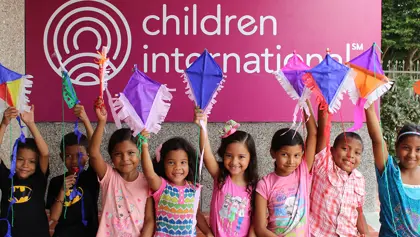
Children International, a prominent non-profit organization established in 1936, has successfully empowered more than one million children and youth to live independently and productively through impactful programs focused on health equity, education, life skills, and employment. Operating in countries facing significant economic challenges, such as Colombia, Dominican Republic, Ecuador, Guatemala, Honduras, India, Mexico, the Philippines, Zambia, and one community in the United States, Children International aims to break the cycle of generational poverty.
The Challenge
Children International partners with dozens of organizations around the world to deliver services. “Everything Children International is about, happens at our partner agencies. They are the ones on the ground that really execute and deliver this mission to their communities and to the children that they serve locally,” said Juliana Garcia, Director, Global Finance at Children International.
However, each of those organizations has historically used different processes and disparate, often outdated systems, creating siloed data, inefficiencies, and technical debt. To address these issues and ensure the continued success of global programs, Children International needed to consolidate onto a single, modern ERP solution.
The Solution … More than ERP
Children International made a strategic investment in modernizing their technology to improve impact. “In order to be more effective, we have declared as a strategic pillar that we would leverage technology in the form of being a data-driven organization,” said Bill Brewster, COO, Children International.
They further made the decision to go “all in” on Microsoft. Tim Bachta, Vice President, Global Information Technology at Children International, explained why: “The reason we went with Microsoft was because of their investment in technology for the non-profit arena.”
The next step was to find a Microsoft partner to support their ERP journey. They were recommended to HSO by another Microsoft partner because of HSO’s demonstrated and award-winning non-profit and ERP experience. According to Bill Brewster, “HSO from the beginning had a great methodology in terms of how to approach the project, how to do it in a way that limited the risk along the way that focused on the execution, the follow-up, the communication, the change management, everything that you need to have to do project like this well.”
After a comprehensive diagnostic, HSO presented a roadmap using Microsoft Dynamics 365 Finance and Dynamics 365 Supply Chain Management. The solution also included HSO’s Finance and Procurement for Public Sector, which integrates additional productivity features into Dynamics 365 for the efficient, reliable management of vendors, contracts, and procurement to reduce costs and ensure compliance.
A key component was ensuring that the system and the implementation process supported multiple languages. Danielle Mitchell, Controller of Finance at Children International, said, “We're implementing this in agencies around the world. We need training docs that are bilingual. We need a system that is bilingual. So it was really important that we found a partner that understood the capability of the system and then how it could best suit the requirements of Children International and its international partners.”
Ultimately, the solution would complete the end-to-end journey of sponsorship dollars by leveraging the inherent integration capabilities offered by the Microsoft Dynamics 365 platform, starting with the consolidation of 13+ siloed finance systems into one global instance of Dynamics 365.
By bringing those disparate systems into Microsoft Dynamics 365 Finance and Supply Chain Management, a goal that every non-profit depends upon was reached. “One of the most important outcomes of this project is to provide that proof of concept to our donors,” said Danielle Mitchell. “By having one system with a consistent chart of accounts, consistent reporting, and that is so integrated, we'll be able to trace dollars coming into Kansas City (Children International’s headquarters) from our donors, make more efficient the use of those funds, and measure the dollars available for impact to the child in India, in the Philippines, in Africa.”
Darwin Villavicencio N., Regional Controller, Latin America for Children International, agreed: “I am really excited about the advantages of the consolidation of the information, the advantages of the information we can share with our partners. The options that Dynamics 365 will open to us to report to our donors, the way we spend their funds. It was a dream, but now it's real.”
“By having one system, we'll be able to trace dollars coming into Children International’s headquarters from our donors, make more efficient use of those funds, and measure the dollars available for impact."

Expanding the Microsoft Platform to Support Engagement and Future Innovation
But things didn’t end there.
As Children International continued modernizing operations, the organization also began evaluating how other systems and processes could better support collaboration, visibility, and engagement across its global network of agencies, partners, donors, and internal teams.
Having successfully partnered with HSO on the ERP transformation, Children International expanded its Microsoft technology strategy to include Microsoft Dynamics 365 Customer Insights – Journeys as part of a broader effort to create a more connected and scalable environment for supporter communications and engagement.
Rather than introducing disconnected point solutions, the organization wanted to continue building on a unified Microsoft platform that could support future growth while reducing complexity across systems and processes.
Because Children International operates in multiple countries and works closely with agencies around the world, scalability and accessibility remained critical considerations throughout the project. Supporting multiple languages, regional processes, and varying levels of technical maturity required a thoughtful and collaborative rollout approach designed to help teams adopt new capabilities at a manageable pace.
Children International and HSO established regional points of contact, structured escalation paths, bilingual training support, and train-the-trainer programs that allowed local teams to support adoption within their own agencies. Training was reinforced through a combination of remote sessions, in-person enablement, and localized agency-level support.
The phased rollout approach also allowed the organization to implement changes region by region, helping teams learn, adjust, and scale in a controlled and sustainable way as additional agencies came online.
Improving Visibility, Accountability, and Operational Decision-Making
By continuing to invest in a connected Microsoft ecosystem, Children International is building a more integrated operational and engagement environment capable of supporting future innovation, improved stewardship, scalable growth, and greater mission impact.
Together, the Dynamics 365 Finance and Supply Chain Management transformation and the implementation of Customer Insights – Journeys helped Children International create a more connected operational foundation across its global organization.
With Dynamics 365 Finance and Supply Chain Management in place, the organization now operates with greater consistency, visibility, and control across global operations. Finance teams spend less time reconciling disconnected systems and more time focused on analysis, oversight, and strategic decision-making.
Standardized global business processes, integrated finance and procurement workflows, and stronger reporting foundations now provide leadership teams with more timely and reliable information to support decision-making across agencies, regional offices, and headquarters.
One of the most meaningful outcomes has been improved donor accountability and financial transparency. With a unified global system and consistent reporting structures, Children International can more clearly trace sponsorship dollars across operations and provide greater visibility into how resources are being used to support children and communities around the world.
The organization has also strengthened oversight across procurement, approvals, and resource allocation while improving collaboration and reporting consistency across global agencies.
At the same time, Customer Insights – Journeys is helping establish a more connected foundation for supporter communications and engagement, while the phased rollout approach continues creating opportunities for improved automation, visibility, and collaboration across teams and regions.
For Children International, the transformation represented more than a technology implementation. It established a connected operational platform designed to support stronger stewardship, improved collaboration, scalable growth, and greater mission impact for years to come.
Watch Children International's Digital Transformation Story
At the forefront of fighting generational poverty, Children International is embracing digital transformation with the support of Microsoft and HSO to amplify its global impact. This video highlights the organization's strategic use of technology to strengthen its initiatives, ensuring sustainable development and empowerment for communities in need.
What’s Next: An Ongoing Partnership for Continued Innovation
With all that has already been accomplished, this is just the beginning of Children International’s transformation journey.
The organization continues evaluating opportunities to enhance reporting, improve operational visibility, expand collaboration capabilities, and further modernize systems and processes across the Microsoft platform. Future initiatives may include expanded analytics capabilities, additional automation, deeper operational insights, and continued consolidation of legacy systems into a more unified and connected environment.
Children International is also exploring how emerging AI capabilities embedded across Microsoft technologies can help simplify workflows, improve efficiency, and better support teams around the world as they focus on delivering impact in their local communities.
As the organization continues expanding and modernizing its Microsoft environment, the relationship between Children International and HSO also continues to evolve.
“The partnership with HSO is the biggest thing. It’s not a vendor, it’s a partner,” said Tim Bachta. “Leveraging Microsoft, working with HSO, it allows us to align very well together to achieve our goal, which is ending poverty for good.”
The partnership between Children International and HSO has been built on collaboration, shared accountability, and a commitment to long-term transformation. Together, the organizations continue working to create a connected operational platform designed to support stronger governance, improved stewardship, scalable growth, and greater mission impact for years to come.
“The partnership with HSO is the biggest thing. It’s not a vendor, it’s a partner. Leveraging Microsoft, working with HSO, it allows us to align very well together to achieve our goal, which is ending poverty for good.”