
Explore More Resources for Government
Government Success: Alabama Forestry Commission Modernizes Critical Wildfire Response Capabilities with HSO and Microsoft
How HSO helped AFC replace fragile, manual processes with a connected Microsoft Power Platform foundation for dispatch, field operations, permitting, and future innovation
About
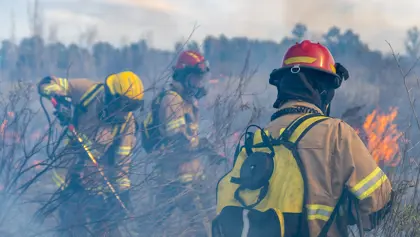
The Alabama Forestry Commission (AFC) plays a critical role in protecting the state’s people, property, and natural resources. Responsible for wildfire suppression, prevention, controlled burn management, and other forestry-related services, the agency supports a vast geographic area across Alabama.
Challenge: When Workarounds Become the Way You Work
The technology supporting some of AFC’s most critical wildfire response operations had become increasingly unreliable.
AFC’s legacy dispatch environment included a homegrown application with an aging .NET front end and SQL back end, supplemented by manual processes and spreadsheet-based tracking.
The system had experienced critical outages, including during active wildfire events. The seriousness of that risk became especially clear in spring 2025, when more than 200 wildfires were active across Alabama in a single day and the system went down.
For an organization responsible for responding to wildfires across roughly 90 percent of the state outside municipal jurisdictions, system reliability was not simply an IT issue. It could directly affect situational awareness, resource coordination, and firefighter safety. AFC knew it needed to modernize. The bigger question was how far that modernization could go.
Over time, AFC personnel had developed ways to operate around the limitations of their technology. Dispatchers could track incidents, distinguish between permitted burns and active wildfires, manually assign resources, and make phone calls to determine who was available and how long it might take them to reach an incident.
But many of those processes relied on manual updates and human coordination rather than a connected, real-time operational view. In some cases, the workarounds themselves had effectively become the process. AFC needed a partner it could trust with the modernization effort.
HSO was already a familiar partner within the State of Alabama. Building on successful work with the Alabama Department of Revenue and the Alabama Department of Mental Health, and with support from Microsoft, HSO was introduced to AFC as the agency began exploring how Power Platform could modernize its operations.
That existing track record helped establish trust quickly. But once HSO and AFC began working through the agency’s needs together, it became clear that the opportunity extended well beyond replacing an aging application.
Rather than beginning the engagement by asking AFC what it could afford to replace, HSO started with a different question: What do you actually need?
As HSO Senior Client Account Executive Alex Bartnesky explained, modernization is not simply about replacing technology. It is about identifying what an organization has been doing without—and determining whether long-standing limitations should still be accepted as inevitable.
HSO encouraged AFC personnel to step outside immediate budget assumptions and describe the operation they would build if they could design around their actual needs.
That changed the conversation. A meeting initially scheduled for 30 minutes became a two-and-a-half-hour working session.
Rethinking What Was Possible
Rather than treating the project as a narrow dispatch-system replacement, HSO and AFC began designing a broader operational platform. Just as importantly, the people who would ultimately use the system were involved throughout the process.
HSO worked closely with AFC stakeholders to shape how the solution should function, how information should be displayed, how users should interact with it, and what different roles needed to see. By participating throughout design and development, users were not simply handed a finished application and asked to adopt it, they learned the solution as it was being created, and they were invested in it.
That collaborative process also gave AFC greater confidence in what could be achieved. After seeing an initial demonstration, state stakeholders recognized the broader importance of the initiative and supported additional investment in the solution.
Solution: From Dispatch System to Operational Platform
HSO built the new environment on Microsoft Power Apps and Power Automate, parts of the Microsoft Power Platform. The phased approach began with dispatch while establishing a foundation that could support additional modules and replace other legacy processes over time.
The new capabilities give AFC a more connected view of incidents, people, equipment, weather conditions, and operational activity. The platform integrates with systems including ArcGIS for mapping and reporting, Samsara for real-time equipment location, National Weather Service and Fire Environment Mapping System data for weather and fire conditions, and IRWIN for national wildfire tracking—replacing information that previously had to be gathered manually or was not available through integrated workflows.
Dispatch personnel can enter incidents and assign resources more efficiently. Real-time visualization, interactive mapping, and heatmaps improve situational awareness during periods of high wildfire activity. Existing databases provide personnel and resource information without forcing AFC to recreate systems that still serve a purpose.
A field application also allows personnel to report their daily availability and the status of assigned equipment such as trucks and bulldozers, creating a more current picture of what resources are actually ready for deployment.
The platform also extends beyond emergency response:
A controlled-burn portal enables certified burn managers to submit permit requests electronically.
Business rules can evaluate weather conditions and other parameters to help determine whether a burn is allowable, replacing a process that historically relied heavily on phone calls and manual entry.
Interactive mapping allows users to identify burn locations and capture associated county and permit information directly within the application.
Results: Visibility Like Never Before
The most important change is that AFC now has the beginnings of an operational data foundation that did not previously exist. Instead of knowing only that an incident occurred, AFC can increasingly capture the information needed to understand what happened around it: how quickly resources responded, how long suppression activities took, what personnel and equipment were required, and what the outcome of the response was. That information creates opportunities well beyond day-to-day dispatch.
Over time, AFC can use operational data to evaluate response performance, understand resource requirements across different regions, identify trends, support planning, and provide stronger evidence when making funding decisions. Alex specifically described the ability to generate fire-safety information by area as a capability AFC simply did not have before.
In other words, AFC is moving from managing individual incidents to learning from them.
And because the platform is built on Microsoft technology already central to Alabama’s broader modernization strategy, AFC can continue evolving the solution rather than treating this implementation as another fixed endpoint.
What’s Next: Building the Foundation for What Comes After
The current solution creates room for continued expansion, including additional permitting capabilities, public-facing wildfire information, deeper analytics, and other legacy process replacements. It also establishes something AFC did not previously have: a reliable repository of operational data.
That foundation could become increasingly important because the wildfire response system represents only one part of a much larger modernization need. Much of AFC’s broader technology environment was built on the same aging legacy platform, including core functions such as HR, grants management, and time and cost allocation. Those systems face many of the same reliability and maintainability challenges.
By moving toward an interconnected data foundation built on Dataverse and Power Platform, AFC now has a path to modernize those functions incrementally rather than replacing them with another collection of disconnected applications. Over time, that could create a more unified operational environment in which data, workflows, reporting, and future capabilities can work across the agency.
That matters as organizations increasingly explore AI. HSO deliberately did not make AI the centerpiece of this project. The more important first step was creating the connected data foundation AI would eventually need. As Alex said, without reliable information to draw from, AI has little meaningful foundation on which to operate.
For AFC, modernization therefore became more than replacing an aging dispatch application. It became an opportunity to rethink how a mission-critical state operation could work—and to build a platform capable of evolving along with it.
For other public-sector agencies facing aging systems, manual processes, and years of accumulated workarounds, the lesson may be equally important: The starting point for modernization does not have to be what needs to be replaced. It should start with asking the question, “What have we been doing without?”

From Manual Processes to Modern Response
Discover how HSO can help your government rapidly build modern solutions with the Microsoft Power Platform to streamline processes, improve service delivery, and support better decision-making