
When the Harvest Fails, the Supply Chain Matters More Than Ever

The British weather has always been a frequent topic of conversation. For farmers, however, it is far more than small talk. It determines profitability, influences food security, affects commodity pricing and, ultimately, impacts what appears on supermarket shelves.
This year’s UK harvest has been a sobering reminder of that reality.
Across many parts of the country, yields have disappointed. Some growers have battled difficult growing conditions, others have seen quality challenges, and many face the uncomfortable reality that the volumes coming off the fields simply do not match expectations. For an industry already operating on tight margins, lower yields create a double challenge. Costs remain stubbornly high, while the volume available to absorb those costs falls.
For UK agriculture, the result is often reduced profitability. For food manufacturers, it creates uncertainty around availability, pricing and sourcing. For consumers, it can eventually mean higher prices and reduced choice.
The challenge, however, extends far beyond British farms.
The World Has Become a Less Predictable Place
When I began working in supply chains over twenty years ago, many organisations still operated with a relatively stable view of global sourcing. There were certainly seasonal fluctuations and occasional disruptions, but global trade largely followed predictable routes and patterns.
Today, disruption has become the norm rather than the exception.
The war in Ukraine highlighted the vulnerability of global grain and agricultural markets almost overnight. Products that many organisations had historically regarded as readily available suddenly became strategic concerns. Commodity markets reacted rapidly, availability became uncertain and established sourcing strategies were put under enormous pressure.
At the same time, entirely different challenges emerged elsewhere in the world.
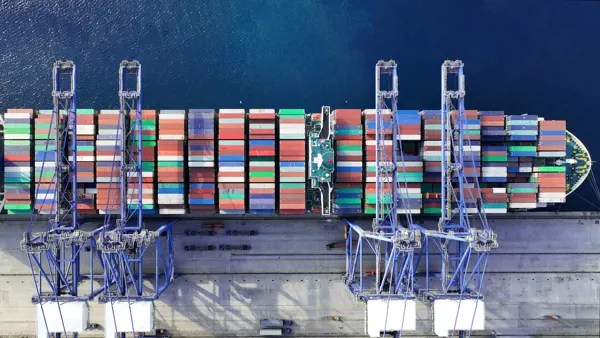
The Ever Given becoming stranded in the Suez Canal demonstrated how a single incident could impact global trade flows for weeks. Thousands of containers were delayed, shipping schedules were disrupted and organisations around the world were forced to rethink assumptions about lead times and inventory.
More recently, restrictions on vessel movements through the Panama Canal, driven by water shortages and reduced water levels, have reminded us that climate-related challenges are now supply chain challenges. Geography, weather and environmental pressures are becoming increasingly important factors in sourcing decisions.
When looked at individually, each of these events appears unusual. Taken together, however, they tell a very different story. They demonstrate that volatility is no longer the exception. It is becoming a permanent feature of modern supply chains.
A Lesson from Mango Chutney
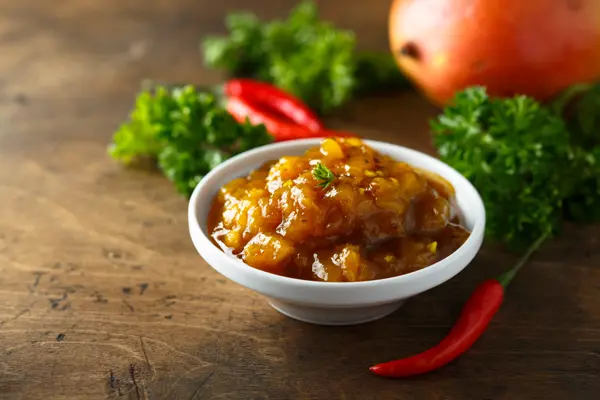
One of the most powerful lessons I learned early in my career came from a food manufacturer producing mango chutney.
The product itself appeared straightforward enough. The challenge was not manufacturing. The challenge was mango supply.
The organisation had experienced repeated disruption from variable harvests and inconsistent availability from source regions. As a result, they adopted an extraordinary strategy: they held approximately two years of mango inventory on site.
Not because they wanted to. Not because it was efficient. Not because it improved cash flow. They held it because the alternative was potentially being unable to manufacture a key product
The working capital implications were enormous, the warehouse footprint was significant and the operational complexity was considerable. Yet the supply risk justified the decision.
That experience has stayed with me because it highlights a fundamental truth. Supply chain decisions are rarely pure optimisation exercises. More often they represent deliberate trade-offs between cost, service, risk and resilience. Today, many food manufacturers are facing similar conversations.
Resilience Is Becoming a Competitive Advantage
For years, supply chains were largely measured on efficiency. Reduce inventory. Reduce suppliers. Consolidate spend. Standardise sourcing. Optimise transportation. The approach made perfect sense when the primary challenge was cost.
The world has changed. Today, resilience is becoming a source of competitive advantage.
When disruption occurs, the organisations that can respond fastest often win. They maintain customer service levels, preserve margins and protect market share. Most importantly, they continue supplying products while competitors struggle.
This requires a different mindset. Rather than relying on a single source of supply, organisations are increasingly exploring dual-sourcing strategies. Instead of selecting the cheapest supplier for every scenario, they are considering a combination of suppliers with different strengths.
One model we increasingly discuss with clients is the concept of a baseline supplier and a response supplier. The baseline supplier provides the majority of volume at an optimised cost. Alongside them sits a second supplier capable of responding quickly when circumstances change. Their costs may be higher, but their flexibility provides insurance against disruption.
Viewed purely through a procurement lens, the second supplier may appear expensive. Viewed through the lens of business continuity, customer retention and risk mitigation, the economics often look very different.
Better Decisions Require Better Data
Of course, developing these strategies requires visibility. Many food manufacturers still rely on spreadsheets, fragmented systems and disconnected planning processes. When disruption occurs, enormous effort is expended simply trying to understand what is happening.
Which suppliers are affected? What stock is available? What alternatives exist? What products are at risk? What customer commitments are exposed? How much working capital is tied up in inventory? How quickly can sourcing decisions be changed? These are not technology questions. They are business questions that require technology-enabled answers.
The most resilient organisations are creating what I often describe as a “decision-ready supply chain”: a supply chain where information is available quickly enough to enable action before problems escalate.
Advanced demand planning, integrated business planning and AI-supported forecasting allow organisations to anticipate issues rather than simply react to them. Better forecasting reduces uncertainty. Reduced uncertainty lowers inventory requirements. Lower inventory requirements release working capital.
Perhaps more importantly, good forecasting creates confidence: confidence to commit to suppliers, negotiate contracts, invest and grow. In an environment where uncertainty is increasing, confidence becomes a strategic asset.
Traceability Is No Longer Optional for Food Manufacturers
There is another dimension to resilience that food manufacturers cannot afford to ignore: the consumer.
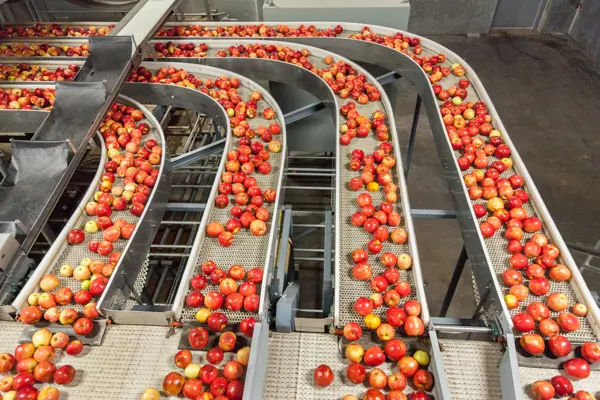
Today’s consumers increasingly want to understand where products come from, how they were produced, and whether sustainability claims can be trusted. Questions that were once asked only by auditors are now being asked by shoppers. (put these bullet points in the place you would typically use an image)
Where was this ingredient sourced?
Was child labour involved?
How much water was consumed?
What is the environmental footprint?
Can the provenance claim be independently verified?
Can the organisation prove the quality standards being advertised?
Increasingly, trust is becoming a differentiator. Food manufacturers that can provide transparent, auditable and verifiable traceability gain a significant advantage. They can demonstrate quality, validate sustainability claims, command premium positioning and build stronger consumer confidence.
Achieving this level of visibility requires connected systems, integrated data, and end-to-end supply chain transparency. The days of managing provenance through disconnected spreadsheets and paper records are rapidly disappearing.
Turning Disruption into Opportunity
The food manufacturers that thrive over the next decade will not necessarily be those operating in the most stable markets. They will be those capable of responding most effectively to instability.
Organisations supported by HSO and Microsoft are increasingly using technologies such as Dynamics 365, Microsoft Fabric, Power Platform and Copilot to create connected, intelligent supply chains. These advanced supply chain platforms help businesses consolidate information, improve forecasting, model sourcing alternatives, understand inventory exposure and surface risks before they become crises.
More importantly, they help decision-makers focus on decisions rather than data gathering. Instead of spending days collecting information from multiple systems, planners can spend time evaluating options. Instead of reacting to disruption, they can anticipate it. Instead of carrying excessive inventory simply because they lack confidence in the forecast, they can make informed choices based on timely, trusted information.
The disappointing UK harvest is undoubtedly a challenge. Combined with ongoing global disruption, it reinforces just how fragile food supply chains can be.
Yet it also serves as a reminder that resilience is not built through luck. It is built through visibility. It is built through planning. It is built through better decisions. And increasingly, it is built through technology.
The organisations that recognise this reality will do more than survive disruption. They will use it to differentiate themselves, strengthen customer trust and create sustainable competitive advantage in an increasingly unpredictable world.
The opportunity is not simply to withstand disruption, but to build a supply chain that sees change sooner, responds faster and earns greater trust from customers and consumers.
Turn Supply Chain Disruption into a Competitive Advantage
Learn more about our food and beverage manufacturing services and discover how HSO can help you improve forecasting, reduce risk, release working capital and build a more agile, decision-ready supply chain.
Or simply talk to our supply chain food manufacturing experts today.