
Getting more work done with the same staff
For energy and utility companies, the greatest productivity gains often come not from hiring more people, but from making better use of existing knowledge, processes, and technology. Learn how data and AI help make knowledge more accessible, make information available more quickly, and automate routine tasks.

While the volume of work is growing, technical staff remain in short supply. This not only calls for more efficient processes; it also requires better access to knowledge and information. After all, when technicians, planners, and service staff have to repeatedly search for information that is already known, valuable time is lost.
Knowledge Gets Lost Among Work Orders
An experienced technician can often tell where to look from an error code and the history of a system. For a less experienced colleague, that knowledge is only useful if it can be easily found.
The better you document that knowledge, the less you depend on whoever happened to have worked on the same asset previously. This becomes especially important when experienced employees leave and new colleagues need to be able to work independently more quickly.
Often, the data does exist: some of it is with the asset, in the work order, in a customer report, with a contractor, and sometimes in the head of an experienced colleague. But after the visit, that knowledge can be lost. A “resolved” status says little about the cause of a malfunction. What was defective? Which part was replaced? A record (no matter how brief) helps the next technician much more.
That record must, however, fit into the normal workflow. Vincent: “A technician gets a sense of accomplishment from solving a problem, not from a mountain of extra paperwork.” The benefit, therefore, isn’t in recording more, but in documenting just enough to help the next colleague get started more quickly.
“The number of assets you need to manage is growing much faster than the number of technicians you can hire. So you want a technician to have the right information and parts with them on the first visit. An extra trip because information or parts were missing costs time that could have been spent on another service call.”
The Same Customer View for Everyone
What Field Service knows is also valuable to your Customer Service department. If a customer asks when a malfunctioning charging station will be available again, a service representative can only provide a specific answer once it’s clear whether the report has been assessed, when a visit is scheduled, and what happened during a previous visit. Without that context, the customer is left waiting. And when the next question comes up, the search starts all over again.
With business customers, information is also scattered across organizational boundaries. An energy company may handle customer contact, while another party performs the repair. That service provider needs the location, problem description, and relevant history. The party speaking with the customer must then know what has been done and whether the work is complete. It’s important to establish clear agreements about this.
Vincent: “Customer reports can also reveal insights about operations. Are there follow-up questions about the same asset after a repair? Do customers mainly call because the status of an appointment is unclear?” You only see such patterns when reports, work orders, and asset information are linked together.
Customer Service then provides insights that Operations can act on. Conversely, up-to-date information from Operations helps provide customers with faster and more specific answers.
How AI Can Help Your Organization Save Money and Where to Start.
In just five minutes , you’ll gain insight into where AI will deliver the fastest return on investment within your organization . You ’ll receive a free, personalized report highlighting the biggest opportunities, the expected impact , and a logical first step—all based on insights from HSO projects at similar organizations.

Turn completed work into actionable insights
The shift doesn’t start with AI, but with the question of what information someone needs to make the next decision:
For Field Service, this includes, for example, an asset’s history, previous diagnoses, work instructions, and available parts.
For the planner, the required skills, travel time, and capacity are also important.
For Customer Service, the current status, agreements made, and a clear explanation for the customer are relevant.
That requires more than just collecting data. You need to link the correct asset to the work order, update the outcome of the visit, and make progress visible to Customer Service.
In Dynamics 365 Field Service, you can link repairs, inspections, and previous work orders to an asset. The scheduling assistant helps find suitable employees based on availability, skills, and location.
“You don’t have to replace every existing system in your organization to do this,” Vincent explains. “If part of the process works well, you can keep it and improve the areas where information is currently lost.” Take, for example, a type of malfunction that occurs regularly:
What does the technician miss when leaving?
Is the cause documented afterward?
Can Customer Service track progress without having to call anyone?
The answers show you where adjustments can make a difference.
Real-world example: Field Service—prepared for the same asset
A technician receives a work order for a charging station that has failed again. If previous visits, identified causes, and repairs performed are linked to the asset, he can see what his colleagues have already tried before leaving. As a result, he leaves better prepared, the chance of a first-time fix increases, and extra trips are avoided.
AI can help search through or summarize that history more quickly.
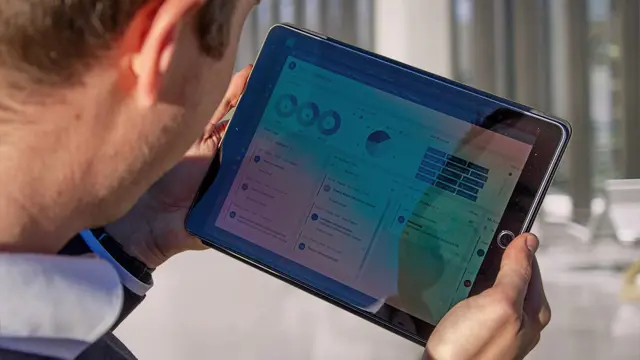
17,000+ assets. From fragmented data to predictive maintenance.
At Schiphol, BAM manages 800,000 m² and more than 17,000 assets. IoT signals detect problems and automatically trigger a work order and scheduling process.
How AI Can Support Field Service and Customer Service
Information from previous work orders and customer interactions is only valuable if employees can find it when they need it. In Field Service, for example, AI can summarize a work order so that a technician or planner can quickly see the status, history, and relevant information about the work that has been performed.
In Customer Service, AI can summarize a case and pull relevant information from available knowledge sources. This reduces the need for an employee to search through files, notes, and manuals themselves.
Real-world example in Customer Service: the right information when a report comes in
A customer calls about a charging station that has failed again. The service representative sees the current report but also wants to know what was discussed during the previous contact and which instructions apply to this malfunction. Instead of having to search through multiple files and manuals themselves, the agent is presented with a summary of the case and relevant knowledge articles. The service agent then verifies whether the information is appropriate for the customer and the report.
For frequently recurring customer questions, AI can go one step further. The HSO Customer Service Agent can handle standard questions and forward more complex ones to an agent. This allows Customer Service to process higher volumes without having to address every question manually.
Copilot in Dynamics 365 Customer Service: Faster Responses, Better Service.
See how Copilot helps employees find answers faster and resolve customer issues the first time .

Getting more work done starts with spending less time figuring things out from scratch
For a COO, it’s about managing more assets with limited technical capacity. For a CCO, it’s about providing customers with clarity more quickly. Data and AI support both by making work order history, asset information, and customer contacts available more quickly and by partially automating common tasks.
This helps reduce repeat visits, increase the first-time-fix rate, and provide faster support for customers—not because AI replaces employees, but because it helps them make better use of the knowledge that’s already available.
HSO helps better connect Field Service, Customer Service, and data sources, and adds AI and agents where they deliver value. This allows you to serve more assets and customers with the people and expertise you already have.

Get more out of the assets, systems, and people you already have.
For grid operators, energy suppliers, and heating and gas companies that need to connect, serve, and report more with the same staff. We help you scale your operations to meet the challenges ahead, from field service and customer contact to reporting and compliance.







Want to know where to start?
Please briefly describe the challenges you’re facing. Within two business days, Vincent Maulany, our specialist for the energy and utilities sector, will contact you to schedule a no-obligation consultation. During this consultation, we’ll share our experience with similar challenges and work with you to identify opportunities for your organization.