

Offering
View HSO Pre-built AI Agents


Agentic AI Strategy: How to Build One That Actually Delivers

Gartner predicts that over 40% of agentic AI projects will be cancelled by 2027 due to unclear ROI.
Most organizations have the investment, the demos, and the pilots, but not the strategy that connects any of it to a commercial result.
This article covers what a real agentic AI strategy looks like, the four phases it has to move through, and how to get from a first working agent to enterprise-wide impact.
What is an Agentic AI Strategy?
An agentic AI strategy is a business-led plan that defines which processes AI will run, on what data foundations, under what governance, and toward what measurable outcomes, all defined before any agent or platform is built.
Most organizations do not have one. They have agents. They have AI PoCs. They have experiments running across two or three business units with varying degrees of management attention. What they are missing is an agentic AI strategy that connects the activity to a commercial result.
A proof of concept answers the question: can this agent work technically? A strategy answers a different one: what will it deliver commercially, and what has to be in place before it can?
Deloitte's 2025 enterprise survey found that 38% of organizations are piloting agentic AI solutions and only 11% are actively using agents in production.
Why Most Agentic AI Strategies Don't Deliver an ROI
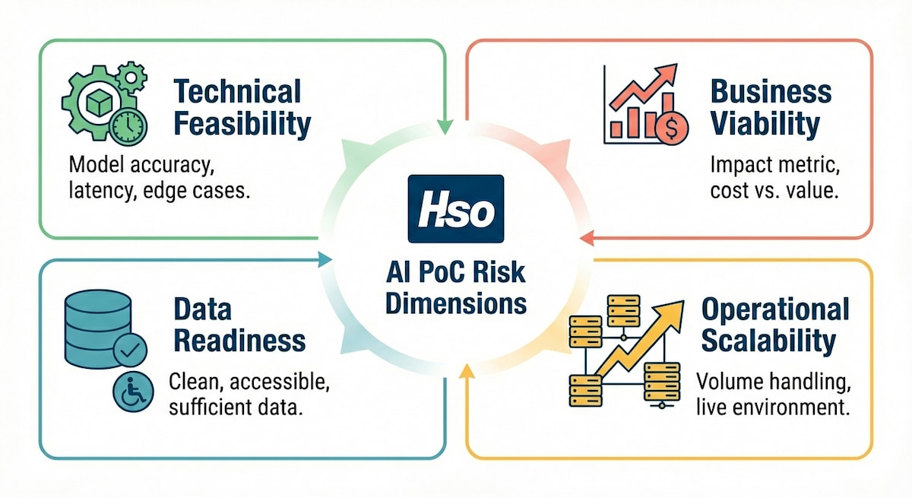
The failure rate is not random. 94% of AI projects stall for many of the same reasons, and they are visible before a single agent is built.
McKinsey's November 2025 State of AI survey found that 88% of organizations use AI in at least one function and 62% are experimenting with agents. Fewer than 40% report any enterprise-level financial impact. Only around 10% have scaled agents in any single function.
The organizations contributing to those numbers are not making technology mistakes. They are making strategy mistakes, and the same five patterns appear consistently.
“Everybody right now is like a kid in a candy shop when it comes to AI. Where's the strategy? Where's the plan? If you don't have data to support a use case—and if the fundamentals are broken, everything else is broken as well.”

Pattern 1 - Wrong Agentic AI use case chosen: The process gets selected because it looks interesting or because someone in leadership saw a compelling demo. There are no defined success criteria (Like “cut overdue invoices by 15%.”), no break-even calculation, and no acceptance threshold. When the agent ships, there is nothing to measure it against.
Pattern 2 -Data not ready: The agent is deployed on fragmented, inconsistent, or low-quality data. The most capable model available cannot compensate for data that is not aligned to support the use case. Garbage in, garbage out has not stopped being true.
Pattern 3 - Process not mature enough to automate: A process that lives in someone's head, in the informal judgment calls experienced staff make without thinking, cannot be reliably replicated by an agent. Agents execute the logic they are given. If that logic is incomplete, ambiguous, or undocumented, the agent surfaces that ambiguity at scale.
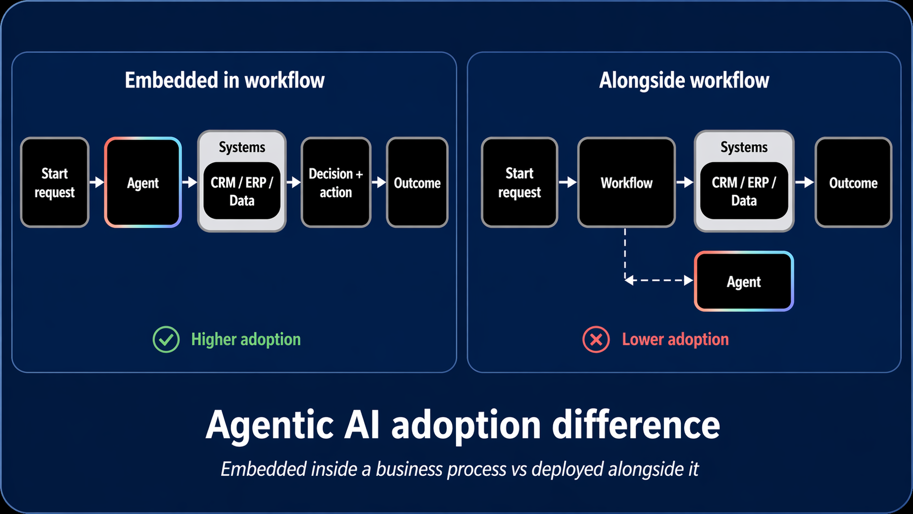
Pattern 4 - Agent built alongside the workflow, not inside it: An agent that sits next to a process is optional. Employees can use it or ignore it. An agent embedded inside a process is how work actually happens. Most implementations that stall by week four were designed as an optional layer, not as a structural part of how the work gets done.
Pattern 5 - AI Change management treated as a follow-on: Adoption drops not because the agent fails technically but because it was never designed to become part of how people work. The tool launches, training happens once, and by week four most employees have returned to previous habits.
How to Build an Agentic AI Strategy: HSO’s Four Phases
HSO treats agentic AI strategy as a design-led discipline, not a technology implementation. The approach moves through four phases, each one building on the last, from initial assessment to full strategic transformation.
The four phases are:
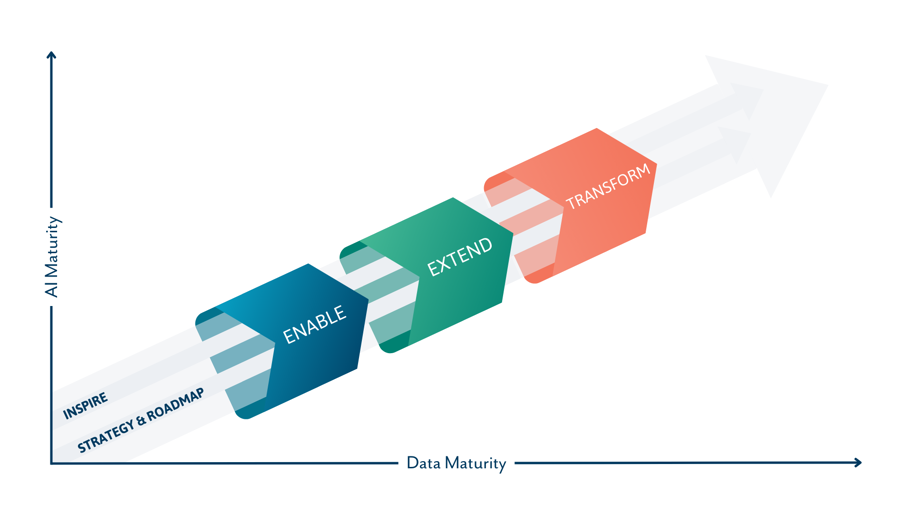
Before any agent is built, an organization needs to know where it actually is, its AI maturity, its data readiness, and which processes are genuinely worth automating.
Organizations skip this phase because it feels slow. The pressure to show something running is real, and a readiness assessment does not produce a demo. But the cost of skipping it surfaces downstream, when agents miss ROI targets three months into a build that has already consumed significant budget.
“The right question is never 'how do we automate what we do?' It is 'what does success look like at the end of this process, and how do we design an agent that gets there?”

Data is what agents run on. Poor data quality, fragmented sources, and missing business context produce agents that confidently give wrong answers.
Organizations in regulated industries with mature data management and data governance consistently move faster and see better returns than those that treat data readiness as something to address after initial deployment.
Not every candidate process is worth automating. Five criteria separate use cases worth building from ones that will disappoint:
| Criterion | What to Assess | 🟩 Green Signal | 🟥 Red Signal |
|---|---|---|---|
| Volume | How often the process runs | Daily or multiple times daily | Weekly or less |
| Cost | Current manual execution cost | Significant and visible | Negligible or hard to quantify |
| Measurability | Can outcomes be tracked? | Clear metric exists | Vague productivity claim |
| Process maturity | Is the workflow documented? | Defined, governed steps | Lives in informal judgment |
| Embeddability | Can it go inside the workflow? | Process can be redesigned around the agent | Agent would sit alongside, not inside |
The fastest path to enterprise confidence is a single working agent with a clear ROI case, built inside the workflow, governed from day one, and validated with real users before scale.
Phase 2 is where assessment turns into action. The approach is deliberate: build one high-confidence use case, prove the commercial case, and use that result as the foundation for what comes next. The full enterprise roadmap can wait. The first agent cannot.
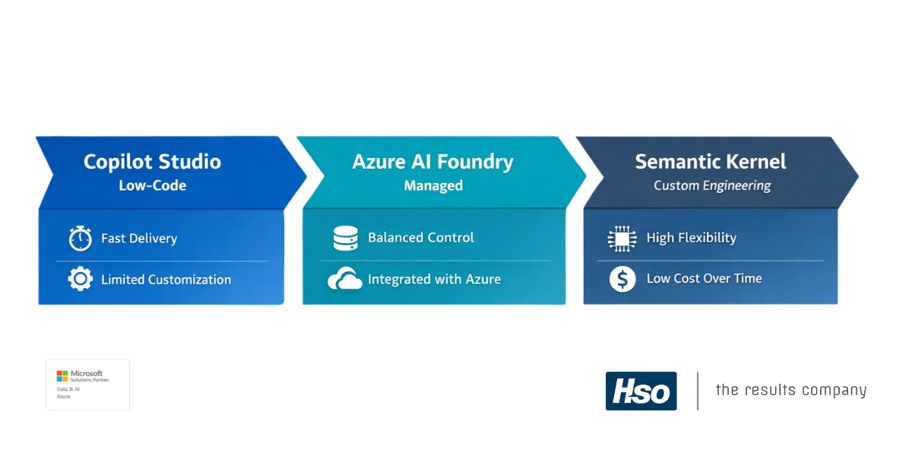
Building with production-tested accelerators. Microsoft Copilot Studio and Azure AI Foundry allow agents to be built, deployed, and monitored within existing Microsoft environments. HSO's pre-built agent library moves qualified use cases to production within days and weeks rather than months.
The Expense Entry Agent illustrates the approach to employee administration. Receipt photos submitted in Microsoft Teams are processed by the agent, which extracts the data, matches it to the correct expense categories and project codes, and auto-populates the relevant fields in Dynamics 365. Compliance improves as friction drops.
Three questions need answers before any agent goes live:
“Companies may not necessarily know how the agent will behave once it's actually out there. If an agent runs, who's accountable for it? Who's responsible for its behavior—and what if it makes a mistake?”

Once initial value is proven, the strategy shifts from deployment to management, treating agents as operational workloads, building adoption across the workforce, and establishing the AI governance structures needed to scale safely.
Phase 3 is where most organizations discover that their initial deployment assumptions do not hold at scale. A single well-governed agent is manageable. Ten agents across three business units, each with different data sources, different accountability owners, and different performance baselines, requires something more deliberate.
The pattern is consistent: week one sees high engagement as users explore the new tool. By week four, most have returned to previous habits. No one made a decision to stop.
Three practices that build genuine trust in an agent:
With 90% of organizations expecting a critical AI skills shortage by 2026, structured enablement and leadership modeling are required conditions, not afterthoughts. Adoption, not deployment, is the primary success metric.
Agents are operational workloads. They are not software that ships once and runs indefinitely without attention. HSO’s AI managed services look after the full agent lifecycle: usage and performance monitoring, periodic review and housekeeping, security and access validation, governance documentation, and knowledge source maintenance.
“One of the biggest issues in the world of AI is adoption and change management. The reality is that buying a tool is not the same as embedding it; an agent alongside the process becomes optional, but one embedded in the workflow becomes the integral part of the process.”
Phase 4 is not about deploying more agents. It is about reimagining how the business operates, with intelligent solutions running as the foundational layer of how work gets done.
The organizations that reach Phase 4 have moved past the question of whether agentic AI delivers value. They are asking a different one: what can the business do now that it could not do before?
The shift from human by default to human by exception is visible across functions in a Phase 4 organization.
The telemetry and feedback loops built in Phase 3 do more than monitor performance. They surface new AI automation opportunities and provide the data needed to refine existing agents. Each production agent generates insight that informs the next one. The AI strategy compounds rather than plateaus.
HSO's Approach to Agentic AI Strategy
HSO combines over 30 years of Microsoft platform expertise with a structured, business-led approach that maps directly to the four phases, from strategy assessment and use case discovery through to production-ready agents, lifecycle governance, and long-term management combined with optimization.
HSO's starting point is always the outcome question, not the technology recommendation.
Every engagement begins with an assessment that positions the organization and produces a prioritized roadmap before any build work begins. The target is a working agent with a defined commercial return, not an impressive demo.
HSO builds agentic AI exclusively on Microsoft's platform, ensuring agents integrate directly with the systems organizations already use.
Rather than creating a custom AI agent on every deployment, HSO maintains a library of industry specific and production-tested agents built for the most common enterprise processes.
Each agent is built on Copilot Studio and Dynamics 365, tested in real enterprise environments, and designed to be configured for specific business contexts. Organizations can see results in days rather than months.