LLM Development Services

Build, fine-tune, and deploy large language models that solve real business problems.
Talk to an LLM Expert

Move Beyond Off-the-Shelf AI

Most organizations start their AI journey with general-purpose models. They quickly hit a wall. Public LLMs lack the proprietary context, domain expertise, and security controls that enterprise operations demand. The result is hallucinations, data exposure risks, and AI that sounds impressive in a demo but fails in production.

HSO's custom LLM development services take you from experimentation to enterprise-grade AI. Built on Microsoft Azure AI Foundry and backed by HSO's data-first methodology, we deliver large language models that are grounded in your data, secured within your infrastructure, and designed to generate measurable business outcomes.

From Strategy to Production

LLM Development Services

HSO delivers end-to-end LLM development services across the full lifecycle - from identifying high-value use cases and preparing your data estate to building, deploying, and continuously optimizing custom large language models in production.

LLM Strategy & Use Case Discovery

  • Structured workshops that identify the highest-value LLM use cases tied directly to business KPIs, not technology for its own sake
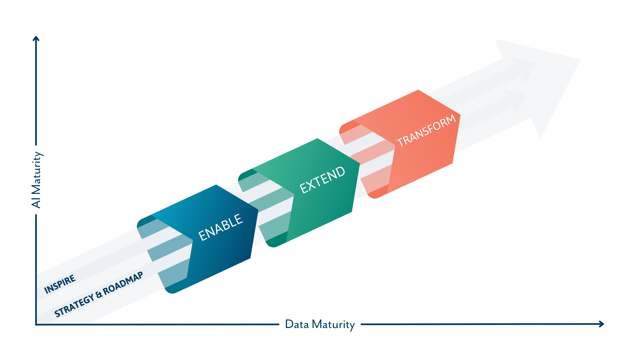
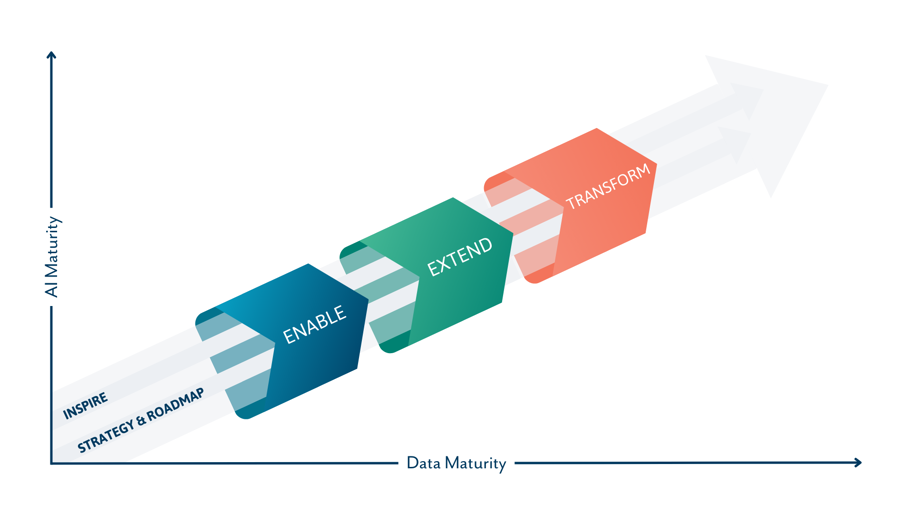
  • Assessment of your organization's AI maturity level, determining whether you need retrieval-augmented generation, fine-tuning, or a hybrid approach
  • Architectural evaluation comparing build vs. orchestrate strategies to ensure optimal cost, performance, and time-to-value
  • Model selection guidance across Azure OpenAI (GPT), open-source models (Llama, Mistral), and small language models (Microsoft Phi) based on task complexity, latency requirements, and data sensitivity
  • Roadmap delivery with phased milestones, clear success metrics, and transparent total cost of ownership projections
Your LLM Development Partner

Why Choose HSO for LLM Development Services

Building enterprise LLMs requires more than model expertise. It demands deep data engineering, secure cloud architecture, and the operational discipline to move from prototype to production. HSO delivers all three.
  • 1

    Data-First Methodology

    HSO does not start with models. HSO starts with data. Before any LLM development begins, HSO assesses your data estate using Microsoft Fabric and Microsoft Purview to clean, structure, govern, and secure the information that will feed your models. This data-first approach is why HSO's LLM solutions deliver accurate, trustworthy outputs where others produce hallucinations and unreliable results.

  • 2

    Verified Microsoft AI Expertise

    HSO holds the "Build AI Apps on Microsoft Azure" specialization, a credential that verifies technical expertise in deploying AI using Azure OpenAI, Azure Cognitive Services, and Azure Machine Learning. HSO is also a recognized Azure Expert MSP and holds all six Microsoft Cloud Partner Designations. 

  • 3

    Security and Compliance by Design

    Every LLM solution HSO builds operates within Microsoft's enterprise security framework. RAG architectures enforce role-based access control so users only retrieve documents they are authorized to view. Data governance through Microsoft Purview ensures compliance with GDPR, the EU AI Act, and industry-specific regulations. Sensitive data remains external to model weights, supporting the "right to be forgotten" without costly retraining cycles.

  • 4

    End-to-End Microsoft Ecosystem Expertise

    HSO delivers across Dynamics 365, Azure, Microsoft 365, and the Power Platform. This means LLM solutions are designed within the context of your full technology estate, not as isolated AI experiments. Whether connecting an LLM to ERP data, building agents that orchestrate across CRM and external systems, or integrating custom models into existing business applications, HSO delivers AI that fits the operational reality of your organization.

Enterprise-grade AI on the Microsoft platform

Our LLM Development Technology Stack

HSO builds LLM solutions across the full Microsoft AI ecosystem, selecting and integrating the right combination of tools for each engagement.
Our Customers

Customers Driving Results with Custom AI & LLM Solutions

Organizations across industries trust HSO to build custom AI solutions that deliver measurable business outcomes.

Common LLM Development Challenges & Solutions

Every enterprise LLM initiative encounters structural, technical, and organizational obstacles. These are the challenges HSO addresses most frequently, and the approaches that overcome them.

"Our AI pilots never make it to production"

Challenge: This is the industry's most pervasive problem. Up to 95% of generative AI projects fail. The root cause is rarely the model itself, it is fragmented data, missing MLOps infrastructure, and a lack of production-grade engineering discipline.

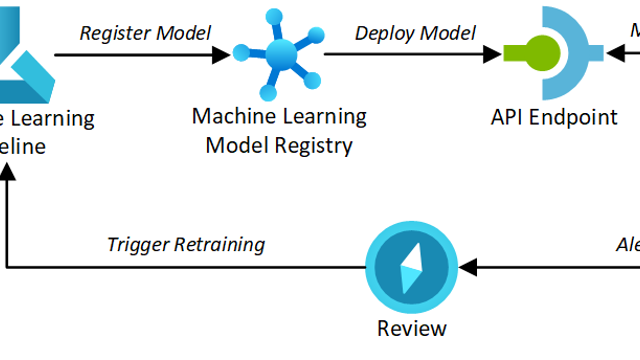
Solution: HSO's methodology is built for production, not demos. Every engagement follows the full LLMOps lifecycle: define the business workflow first, prepare the data foundation, build with production architecture from day one, deploy with monitoring, and optimize continuously. HSO's acquisition of Aware Group brings nearly a decade of experience specifically focused on bridging the gap between AI prototype and production system.

"We don't know whether to use RAG or fine-tuning"

Challenge: Misunderstanding the purpose of RAG versus fine-tuning is a leading cause of project failure and budget overruns. Organizations that fine-tune models to inject factual knowledge face catastrophic forgetting, data privacy issues, and expensive retraining cycles. Those that rely solely on RAG for tone and format control miss its limitations.

Solution: HSO provides objective architectural guidance. RAG is deployed for dynamic, fact-based retrieval where data changes frequently and access control matters. Fine-tuning is applied for static behavioral patterns - domain-specific tone, strict output formatting, and embedded industry expertise. For mature use cases, HSO implements hybrid RAFT (Retrieval-Augmented Fine-Tuning) architectures that combine the strengths of both approaches.

"Our data isn't ready for LLM development"

Challenge: LLMs cannot create value on fragmented, ungoverned data. Many organizations have critical knowledge scattered across disconnected systems, documents in SharePoint, data in ERPs, insights buried in emails and spreadsheets. Without a unified, governed data estate, LLM outputs are unreliable and untrustworthy.

Solution: HSO's data-first methodology addresses this directly. Using Microsoft Fabric for data unification and Microsoft Purview for governance, HSO builds the data foundation before any model development begins. This includes data quality assessment, document ingestion pipeline design, vector database architecture, and access control configuration. The result is a data estate that makes LLM outputs accurate and compliant, not just functional.
"We're concerned about hallucinations and accuracy"

Challenge: LLMs are probabilistic systems that can generate confident-sounding but factually incorrect outputs. In enterprise contexts, financial analysis, legal review, customer-facing interactions, hallucinations create real business and regulatory risk. Traditional testing methods are insufficient because LLM outputs are unstructured and non-deterministic.

Solution: HSO architects RAG systems that ground every response in verified enterprise data, drastically reducing hallucination rates. Beyond architecture, HSO implements rigorous evaluation frameworks using automated metrics (ROUGE, BLEU, perplexity) and LLM-as-a-judge rubrics to continuously assess output quality. Guardrails including confidence scoring, citation requirements, and human-in-the-loop validation ensure that high-stakes outputs are verified before action is taken.

"We need this to be secure and compliant"

Challenge: Feeding proprietary data into LLMs introduces severe risks around data privacy, intellectual property exposure, and regulatory compliance. The EU AI Act imposes strict requirements on high-risk AI systems, and organizations must ensure that sensitive data can be controlled, audited, and deleted on demand.

Solution: HSO builds LLM solutions within Microsoft's enterprise security framework by default. RAG architectures keep sensitive data external to model weights, enabling instant deletion from vector indices without retraining, critical for GDPR and "right to be forgotten" compliance. Role-based access control ensures users only retrieve authorized data. Microsoft Purview provides data classification, sensitivity labeling, and audit trails. HSO embeds Microsoft's Responsible AI principles from day one - not as an afterthought.

From Language Models to Autonomous Agents

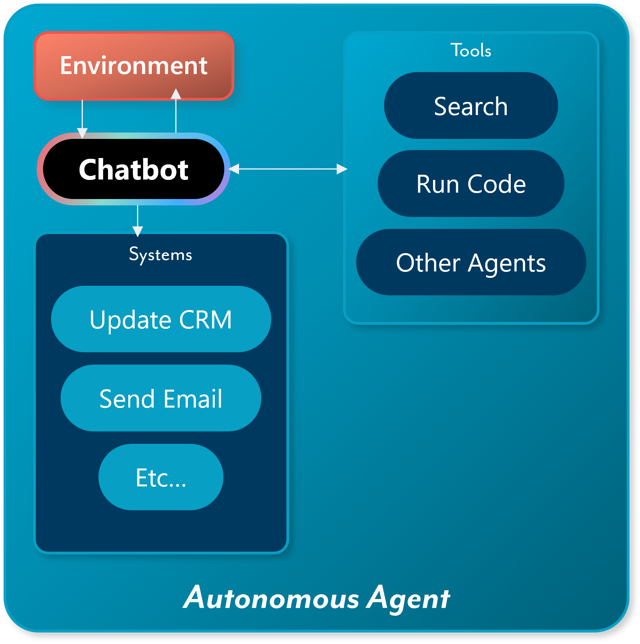
The LLM landscape is shifting from conversational assistants to agentic AI systems that reason, plan, and act autonomously. Gartner estimate that by 2028, 90% of B2B purchases will be mediated by AI agents, facilitating $15 trillion in global transactions.
HSO is already building production-grade agents that orchestrate multi-step workflows across enterprise systems. Whether you are starting with your first custom LLM or scaling to autonomous agent architectures, HSO helps you take each step with confidence.
AI Agent Services
LLM Development Services

Frequently Asked Questions

Answers to common questions about large language model development, enterprise deployment, and how HSO helps organizations build custom LLM solutions.

Connect With Our LLM Development Experts

Whether you are exploring your first custom LLM, scaling RAG architectures across your organization, or building autonomous AI agents, HSO's specialists help you move from ambition to production. Start with a conversation.

By using this form you agree to the storage and processing of the data you provide, as indicated in our privacy policy. You can unsubscribe from sent messages at any time. Please review our privacy policy for more information on how to unsubscribe, our privacy practices and how we are committed to protecting and respecting your privacy.

Related Resources

Learn How Organizations Are Building Enterprise AI Solutions