AI Explained
Cut through the AI jargon—understand how it all connects
AI terminology can be overwhelming. Here's a quick guide to key concepts and how they relate to each other, from the foundational technology to the tools your teams will actually use.
Machine Learning & LLMs
The foundation
Everything starts here. Machine learning teaches computers to learn from data—powering recommendation engines, fraud detection, and demand forecasting. Large Language Models (LLMs) like GPT are a specialized type of machine learning that understands and generates human language. LLMs are the engine behind most of the AI tools transforming enterprise work today.
 Large Language Models →
LLMs enable a new class of AI that can create, converse, and act autonomously…
Generative AI
Creating new content
Generative AI uses LLMs and other models to create new text, images, code, and more—and it's the technology behind tools like Microsoft Copilot and Azure OpenAI Service. Rather than just analyzing existing data, it produces something new. This is what makes modern chatbots far more capable than the keyword-matching bots of a few years ago. They now understand context, nuance, and intent.
When you give generative AI the ability to plan, decide, and take action independently…
Agentic AI & Agents
AI that takes action
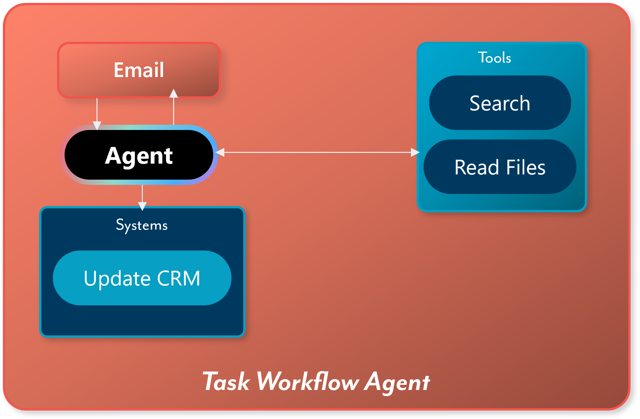
While chatbots wait for you to ask, agentic AI can autonomously plan, decide, and execute multi-step tasks. Think of them as a digital colleague that gets things done. "Agentic AI" describes the capability; "agents" are what you build . An agent might process invoices, qualify sales leads, or orchestrate order fulfillment on your behalf. Think of a chatbot as a conversation, and an agent as a conversation that can also take action.










 Machine Learning
  MLOps
MLOps  Generative AI
  GenAI Development
 Chatbots
  Agentic AI
  AI Agents
  Expense Entry Agent
  PayFlow Agent
  Order Management Agent