
Key highlights from our AI Executive Workshop with Microsoft
What 20 professionals, a room in Paddington and a handful of sticky dots taught us about putting AI to work, now, not someday.

Blog written by Mike Stanbridge.
There is no shortage of noise around AI in supply chain. Every week seems to bring a new prediction, a new platform, or a new promise that artificial intelligence is about to transform everything from forecasting to the factory floor.
I will admit I have been sceptical of some of the bigger claims. Many of the examples we hear about are genuinely useful, but quite narrow: cameras on the shop floor, enhanced demand forecasting, predictive maintenance, network optimisation. All valuable, but they do not always answer the question most traditional supply chain businesses are actually asking: where do we start, and how do we make AI useful now?
For me, the practical opportunity is far simpler. AI is excellent at handling repetitive work, interpreting conversational information, summarising complex inputs and turning them into directed action. That sounds less like science fiction and more like something every supply chain team could put to use on Monday morning.
The carpeted floor is the new factory floor
Over the last 40 years, we have poured enormous energy into improving the visible parts of operations: Lean, Six Sigma, The Toyota Way, Kaizen and countless other improvement methods. Waste on the shop floor is easy to see: excess inventory, wasted movement, downtime, rework, missed sales. But have we applied the same curiosity to the office?
In many organisations, the “carpeted floor” is still full of hidden admin: chasing emails, preparing documents, clarification loops, approvals, spreadsheet updates and manual coordination. It makes you wonder whether today’s office looks a little like the 1960s factory floor, full of hardworking people doing their best, surrounded by opportunities for smarter automation.
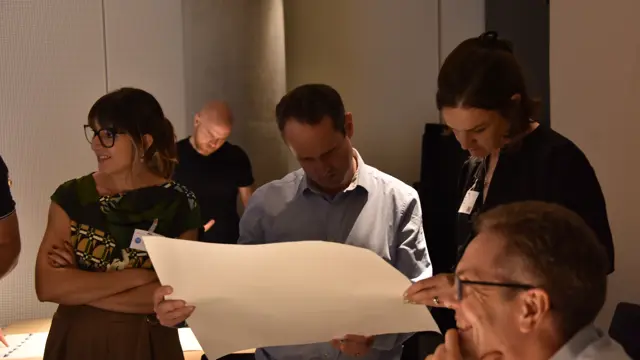
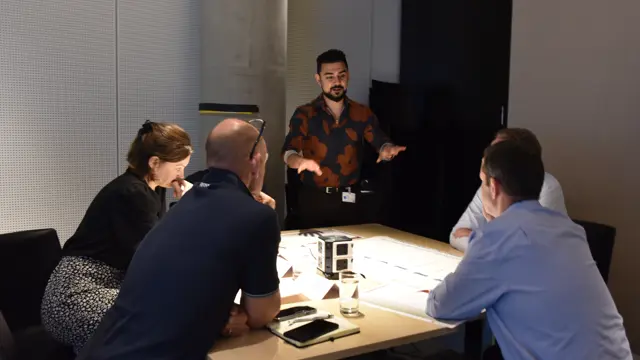
So rather than talk about AI in the abstract, we decided to do something practical. We put 20 supply chain professionals in a room in London Paddington, handed them paper, process maps and sticky dots, and asked them to find where the real piles of admin live in their businesses.
Finding the piles of admin
The exercise was deliberately simple. Participants reviewed four familiar supply chain processes and used sticky dots to vote for the activities they believed carried the greatest administrative burden. Red dots counted double — because, obviously, we could not make it too easy.
The results were fascinating. Even in well-understood processes, the administrative load turned out to be spread across more areas than most of us expected. More importantly, it gave us a very practical starting point: a map of exactly where AI, automation and better workflows could make life easier.
“Even in well-understood processes, the administrative load is spread across far more areas than we expect.”
Process 1 - Inquiry to Cash: the right document, to the right person, at the right time
The Inquiry to Cash group focused on shipping. At first glance theirs was one of the simpler processes, but it made a powerful point: sometimes the biggest opportunity is not adding complexity, but making sure the right information reaches the right person at the right moment.
Their aim was to reduce delays in the pick, pack and ship process by triggering the creation and distribution of the right documents at exactly the right time — saving hours of manual chasing and taking the friction out of preparing shipping paperwork.
It was a healthy reminder that AI does not have to be dramatic. A well-designed workflow, supported by intelligent document generation and clear escalation rules, can create very real operational value.
What we learned
All of this came from a single day: a practical workshop, a room full of supply chain professionals, a venue in London Paddington, and support from Microsoft. No grand theory. No hype. Just an honest conversation about where work gets stuck and where AI could help.
The biggest takeaway for me is that the opportunity is not confined to futuristic or highly technical use cases. Some of the most exciting ideas are hiding in plain sight: admin-heavy processes, document-heavy workflows, clarification loops, approvals and decision support. These are the places where AI can make an immediate, practical difference.
Five takeaways to act on
Start where the admin is. The earliest wins are in admin-heavy, document-heavy work — not moonshots.
The office is the next frontier. Decades of Lean improved the shop floor; the “carpeted floor” is still full of hidden waste.
Keep judgement human. Let AI handle structure, summaries and comparisons; leave the commercial and expert calls to people.
PLM and procurement are underrated. Both carry heavy hidden admin and are ideal for agent-based support.
Capture the human signal. Great demand planning is as much about conversation as it is about calculation.

Our next workshop is in November!
Due to popular demand, we're running this workshop again in November. Spaces are limited.
Get in touch
Our experts run sessions like this regularly. If you would like to explore where AI could remove admin, improve flow and create real value in your supply chain, we would be delighted to help. Bring your process knowledge and we will bring the sticky dots.