The future of ERP software isn't found in complex menu trees or training manuals. It's in conversation.
In 2026, the static ERP systems are slowly transforming into dynamic intelligence platforms that don't just store data but actively interpret it, act on it, and learn from it. Traditional point-and-click interfaces are giving way to AI chatbots and intelligent ERP systems that understand context, anticipate needs, and execute workflows autonomously.
This guide covers real-world business operations use cases, the evolution from simple chatbots to autonomous agents, and best practices for integrating AI into your existing ERP system.
What is an ERP AI Chatbot?
An ERP AI chatbot is an intelligent interface that uses natural language processing and machine learning to interact with your ERP data. Modern chatbots go beyond simple command responses. They're context-aware assistants grounded in your specific ERP data, whether that's customer records, financial transactions, or supply chain metrics.
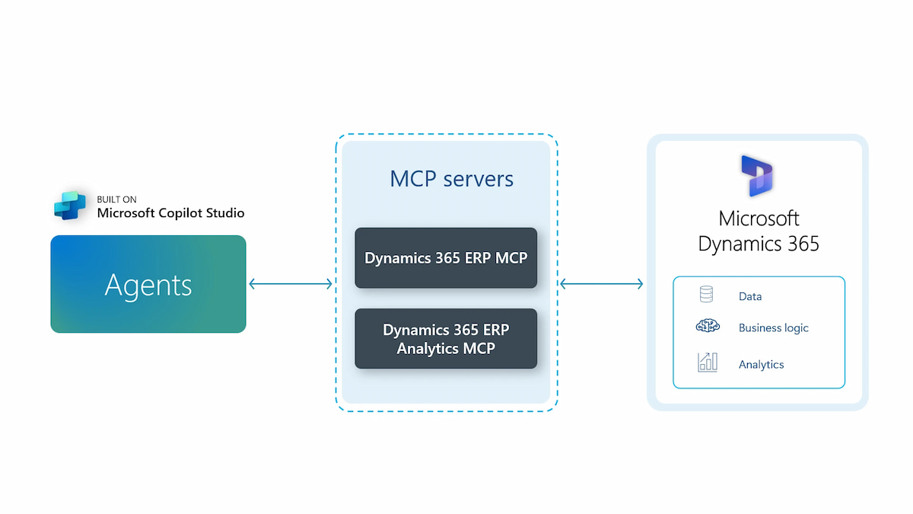
The distinction matters. Rule-based bots follow static decision trees. Context-aware AI Agents analyze your business environment using specific ERP APIs and protocols like the Model Context Protocol to deliver real-time, data-driven insights (subject to user role/security), simplifying secure agent orchestration across ERP functions.
These agents operate through three distinct modes:
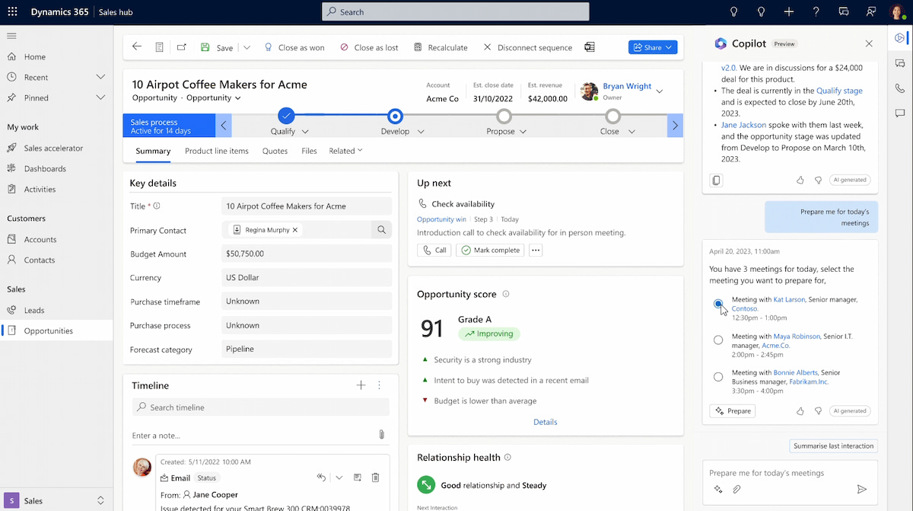
Sidecar
A conversational assistant which can even be voice-enabled that sits alongside your application. Think of it as an always-available expert providing guidance, answering questions, and offering recommendations without disrupting your workflow.
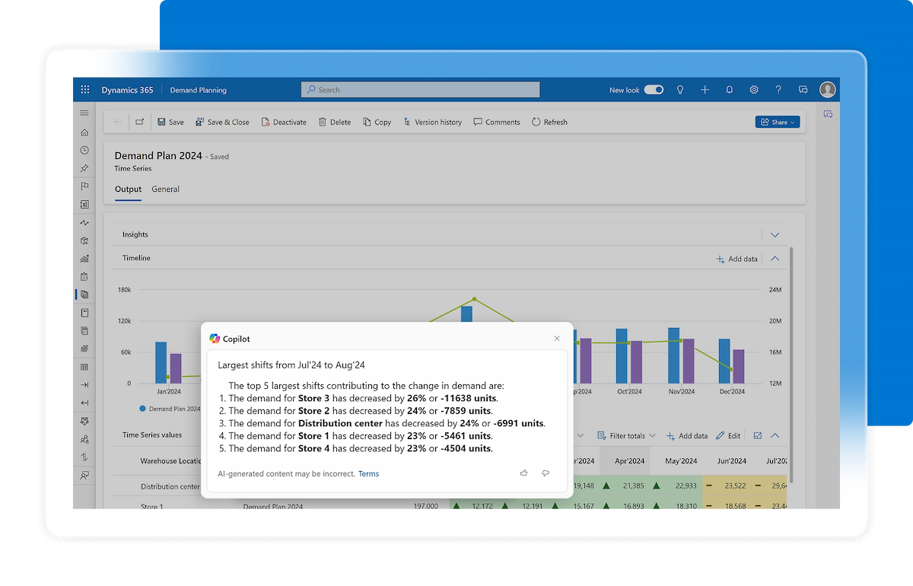
Embedded
AI capabilities integrated directly into ERP modules. You might see AI-generated summaries within a purchase order form or intelligent field population in expense reports.
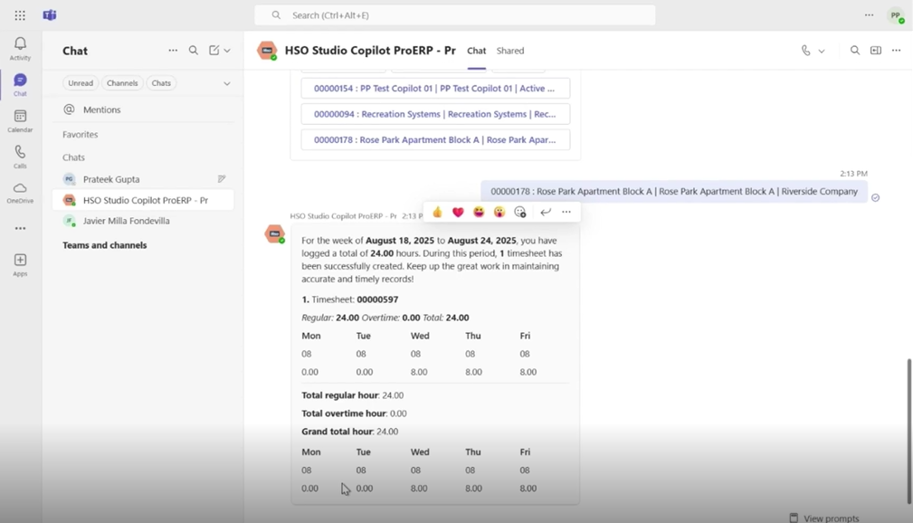
Outside (In Teams, Slack, etc)
External agents that handle ERP interactions from platforms like Microsoft Teams. Employees can check order status, submit approvals, or query financial data without logging into the main ERP environment. Allowing for easier and quicker use for the end user.
Use Cases and Business Examples
Here's how AI can deliver value in practice for ERP processes. These three examples span autonomous communication handling, intelligent document generation, and administrative automation, each addressing a specific pain point that drains productivity in teams.
Due to your cookie preferences, we cannot show you this content. Accept the cookies to be able to view this content.
High-volume accounts payable teams face relentless email traffic. Suppliers want to know when they'll be paid. AP staff spend hours responding to the same questions.
The HSO PayFlow Agent changes that dynamic. Built on Microsoft's MCP (Model Context Protocol), this AI Agent autonomously monitors supplier emails, responds to payment status inquiries, and updates Dynamics ERP data in real-time. It doesn't just answer questions. It understands context like "pay when paid" scenarios, ensuring suppliers receive accurate information about payment timing based on your customer receipts.
The benefit extends beyond time savings. Reduced manual ERP access needs mean AP teams focus on exceptions and strategic vendor relationships rather than repetitive status updates.
Dynamics 365 Copilot solves this by generating personalized dunning letters based on customer payment history, purchase patterns, and external data sources like SAP. The AI analyzes past interactions to determine appropriate tone and timing. It incorporates real-time information about the customer's business situation to craft messages that drive payment while maintaining rapport.
The result is streamlined collections, improved cash flow, and less manual intervention in legacy ERP systems. Your team makes strategic decisions about escalation rather than drafting repetitive correspondence.
Routine operational tasks drain employee morale and productivity. Time entry compliance suffers when employees view it as administrative overhead. Expense reporting becomes a burden when staff manually transcribe receipt data.
Intelligent ERP agents transform these workflows. Time entry agents prompt users at natural moments based on project assignments from Dynamics 365 Finance & Operations, auto-populates lines, and alerts users when entries are missing.
Expense agents extract data from receipt photos to populate custom ERP fields automatically, ensuring policy compliance without manual data entry.
The benefit is measurable. Compliance rates increase as friction decreases. Staff redirect energy toward billable work and strategic initiatives rather than administrative documentation.
Benefits of AI in ERP Systems
122% - three-year ROI and $3.41M in net value from AI-enabled ERP Forrester, 2024*
1
Operational Efficiency
AI compresses timeframes dramatically. G&J Pepsi transformed a multi-day equipment move process involving 180,000 manual tasks into a digital workflow completed in under 35 seconds. That order-of-magnitude improvement isn't unique. Organizations consistently report similar gains when AI handles repetitive processes.
2
Improved Decision Making
AI scans vast ERP data sets to identify patterns invisible to human analysis. For example it can predict supply chain disruptions by correlating weather data, geopolitical events, and historical shipping patterns. It forecasts inventory needs with precision that manual analysis can't match because it processes exponentially more variables simultaneously.
3
Financial Agility
Month-end financial closes compress when AI handles continuous reconciliation. An Account Reconciliation Agent can matches ledger entries and flags discrepancies in real-time rather than waiting for periodic reviews. This shifts finance teams from reactive cleanup to proactive exception management and strategic analysis.
4
Employee Retention
Removing mundane tasks improves satisfaction and reduces churn. Research published by Salesforce and Vena Solutions found that 88% of employees report higher job satisfaction when automation is used to reduce manual workloads, directly counteracting the "boreout" that leads to resignation.
HSO's extensive experience with ERP and CRM solutions positions us very well to deliver impactful AI solutions, as AI becomes increasingly integrated across business applications.
Challenges and Limitations of AI ERP chatbots
AI-powered ERP chatbots deliver real productivity gains, but they can introduce risks that require careful management.
Data Quality and Accuracy
AI is only as reliable as the data it accesses. ERP data is often siloed, inconsistent, or incomplete, and models can generate plausible-sounding but incorrect responses. Invest in data governance before deployment, ground responses in authoritative ERP queries, and display confidence scores so users know when to verify.
Security, Privacy, and Compliance
AI expands the attack surface. Sensitive financial and HR data faces exposure risk, while regulatory requirements demand auditable decision trails. Enforce strict role-based access controls, log all interactions, avoid sending personally identifiable information to third-party models, and ensure the AI respects existing user permissions.
ERP Integration and Legacy Systems
ERP landscapes are complex, spanning multiple modules, customizations, and hybrid environments. Older systems often lack modern APIs, forcing custom connector development. Mapping natural-language requests to specific ERP actions requires deep domain configuration and ongoing maintenance as business rules evolve.
Cost and Scalability
Implementation demands significant investment in integration, training, and governance. Ongoing costs include model fees, prompt engineering, and secure hosting. At scale, real-time lookups and high concurrency can strain databases and cause latency, requiring caching, async processing, and rate limiting.
User Adoption and Workflow Limits
Employees may distrust AI or over-rely on it without verification. Transparent interfaces, clear escalation paths, and training help build appropriate trust. AI handles single-step queries well but struggles with complex multi-leg transactions. Defer intricate calculations to ERP engines rather than AI inference.
News
Logicall, HSO & Microsoft Aim to Build the Most Advanced Data & AI Platform in Logistics
HSO is proud to announce a strategic partnership with Logicall, a leading European logistics service provider.
Technical Readiness: Verify your environment meets AI requirements. For Microsoft Dynamics 365 Finance, you need version 10.0.38 or later with active Power Platform integration in Lifecycle Services. Many Copilot/agent scenarios require a cloud-associated Dataverse environment and Power Platform integration, because AI services require real-time connectivity to Microsoft's infrastructure.
Data Hygiene: "Garbage in, garbage out" applies forcefully to AI. Cleaning ERP data by removing ROT (Redundant, Obsolete, Trivial) information is critical. Poor data quality leads to hallucinations and inaccurate outputs. An AI trained on outdated product codes or inactive customer records will surface misleading recommendations.
HSO's DnA Accelerator helps organizations address this challenge by establishing foundational data governance, security, and seamless integration across Dynamics 365 and other backend systems. Built on Microsoft Azure, it creates a trusted data environment that ensures AI has the clean, reliable information it needs to deliver accurate results. Invest in your data foundation before deploying AI capabilities.
Governance & Security: Configure "least privilege" ERP access and implement sensitivity labels rigorously. AI respects existing user permissions, but you must ensure those permissions are correctly assigned. An AI assistant shouldn't surface confidential salary data to unauthorized users, regardless of how cleverly they phrase their questions. Review access controls and data classification before enabling conversational interfaces.
Strategic Planning: Identify high-impact areas for ERP automation before full rollout. Start with processes that are high-volume, repetitive, and rule-based. AP invoice processing, expense reporting, and time entry typically deliver quick wins. Success in targeted areas builds organizational confidence and provides proof points for expanding AI across additional workflows.
Future Trends in AI ERP

1.The "Invisible" ERP: The monolithic ERP interface is fading. Users increasingly interact with AI agents that execute hundreds of micro-actions across systems without exposing underlying complexity. You ask an agent to "prepare the monthly sales analysis." The agent queries the ERP, pulls data from CRM, formats visualizations, and delivers insights without requiring you to navigating complex ERP systems or multiple applications or understand table structures.
2.Agentic ERP: We're shifting from simple automation to full autonomy. Human-in-the-Loop governance means AI handles routine decisions independently and escalates only high-stakes situations requiring judgment. An agentic AI agent might autonomously reorder standard supplies when inventory drops below thresholds but surface unusual supplier price changes for human approval before committing to large purchases.
3.Hybrid Environments: AI bridges the gap between modern cloud applications and legacy ERP systems. Many organizations run decades-old core systems alongside contemporary tools. AI agents create a unified interface layer that abstracts complexity, allowing employees to work efficiently regardless of underlying technical architecture.
AI in ERP FAQs
No, but the interface will change. The core ERP ledger remains essential for regulatory compliance, financial control, and data integrity.
However, direct interaction with complex menu structures will diminish. Users will rely on AI agents and chatbots to execute tasks, making the traditional ERP interface feel abstracted away while the system continues operating as critical infrastructure.
One natively integrated with your internal data.
For Microsoft customers, Copilot and Copilot Studio are attractive because they can natively use Microsoft Graph and Dataverse as grounding sources, reducing the need for bespoke connectors to the ERP when those platforms are present. Licensing, regional availability, and required configuration are still important to consider. This provides secure, real-time access to ERP data without complex custom connectors.
Generic chatbots (like out of the box ChatGPT, Claude, Gemini) lack context about your specific business operations and require extensive configuration to achieve comparable functionality.
Alternative approaches include external chat interfaces through Teams, Slack, or WhatsApp that query ERP data from familiar platforms, workflow automation tools like n8n for custom integrations, and dedicated conversational AI platforms like Kore.ai for enterprise-grade requirements.
Measure efficiency gains versus costs using this formula: (Total Benefits - Total Costs) / Total Costs.
1.Benefits include labor hours saved through automation, revenue uplift from faster processes, cost avoidance from prevented errors, and improved employee retention.
2.Costs include licensing fees, implementation, change management, and training.
Forrester's Total Economic Impact study on Microsoft 365 Copilot found organizations achieved 116% ROI over three years with payback in 10 months. Key drivers included 9 hours saved per user monthly and up to 2.6% revenue growth from go-to-market improvements.
Chatbots respond. AI Agents act.
·A chatbot answers when asked, returning data or completing single tasks on command.
·An AI Agent operates autonomously toward defined goals. It monitors conditions, makes decisions, and executes multi-step workflows independently (or with a human-in-the-loop).
Where a chatbot shows you an inventory report, an agent detects the shortage, drafts the purchase order, contacts the vendor, and surfaces only the final approval for your input.
Ready to Transform Your Business Operations?
AI in ERP isn't a distant future. It's operational today, delivering measurable results for organizations that implement it strategically.
Contact HSO to discuss how AI agents can transform your ERP from a system of record into a system of intelligence.

The Blueprint to Success: AI in ERP
HSO’s proven blueprint combines ERP discipline with AI innovation to help you plan, prove, and scale measurable business performance.
We, and third parties, use cookies on our website. We use cookies to keep statistics, to save your preferences, but also for marketing purposes (for example, tailoring advertisements). By clicking on 'Settings' you can read more about our cookies and adjust your preferences. By clicking 'Accept all', you agree to the use of all cookies as described in our privacy and cookie policy.
Required
Statistics
Marketing
Required Cookie preferences
Purpose This cookie is used to store your preferences regarding cookies. The history is stored in your local storage.
Cookies
PerplexCookieConsent
Location of Processing European Union
Technologies Used Cookies
Expiration date 1 year
Why required? Required web technologies and cookies make our website technically accessible to and usable for you. This applies to essential base functionalities such as navigation on the website, correct display in your internet browser or requesting your consent. Without these web technologies and cookies our website does not work.
Required Account & login
Purpose These cookies are stored to keep you logged into the website.
Cookies
SessionId
yourAuthCookie
Location of Processing European Union
Technologies Used Cookies
Expiration date 1 year
Why required? Required web technologies and cookies make our website technically accessible to and usable for you. This applies to essential base functionalities such as navigation on the website, correct display in your internet browser or requesting your consent. Without these web technologies and cookies our website does not work.
Required Safe form submissions
Purpose This cookie is used to submit forms to us in a safe way.
Cookies
__RequestVerificationToken
Location of Processing European Union
Technologies Used Cookies
Expiration date 1 year
Why required? Required web technologies and cookies make our website technically accessible to and usable for you. This applies to essential base functionalities such as navigation on the website, correct display in your internet browser or requesting your consent. Without these web technologies and cookies our website does not work.
Required Google Tag Manager
Purpose This service provided by Google is used to load specific tags (or trackers) based on your preferences and location.
Why required? This web technology enables us to insert tags based on your preferences. It is required but adheres to your settings and will not load any tags if you do not consent to them.
Required User Language
Purpose This cookie is used to store your preferences regarding language.
Cookies
perplex-user-language Stores your preferred website language. This cookie expires after 1 year.
Why required? We use your browser language to determine which language to show on our website. When you change the default language, this cookie makes sure your language preference is persistent.
Required Analytics
Purpose This service is used to track anonymized analytics on the HSO.com application. We find it very important that your privacy is protected. Therefore, all data is collected and stored on servers owned by HSO with no third-party dependencies. This cookie helps us collect data from HSO.com so that we can improve the website. Examples of this are: it allows us to track engagement by page, measuring various events like scroll-depth, time on page and clicks.
Cookie
uMarketingSuiteAnalyticsVisitorId This cookie is used to uniquely identify users. The cookie expires after 1 year.
Required A/B Testing
Purpose This cookie enables HSO to run A/B tests across the HSO.com application. A/B testing (also called split testing) is comparing two versions of a web page to learn how we can improve your experience. All data is collected and stored on servers owned by HSO with no third-party dependencies.
Statistics Google Analytics
Purpose With your consent, this website will load Google Analytics to track behavior across the site.
Cookies
_ga Used to uniquely identify users. The cookie expires after 2 years.
_ga_1D4MT58NBE Used to persist session state. The cookie expires after 2 years.
_gid Registers a unique ID that is used to generate statistical data on how the visitor uses the website. This cookie expires after 1 day.
Statistics Microsoft Clarity
Purpose With your consent, this website will load the Microsoft Clarity script, which helps us understand how people use the site. The cookies set by Clarity collect session-level data like how the visitor landed on the site, which pages they viewed, their language preference, and even their general location. This data powers Clarity’s features like heatmaps and session recordings, helping us see which parts of a page get attention and where users drop off. The goal isn’t to track individuals, but to understand patterns that can improve the user experience. Learn more about Microsoft Clarity cookies here.
Cookies
_clck Domain: hso.com Persists the Clarity User ID and preferences, which are unique to this website, and attributes them to the same user ID.
_clsk Domain: hso.com Connects multiple page views by a user into a single Clarity session recording.
clid Domain: clarity.ms Identifies the first-time Clarity saw this user on any site using Clarity.
ANONCHK Domain: clarity.ms This checks if a browser ID (MUID) is passed to another Microsoft cookie used for ads. For Clarity, this always returns a “no.”
MR Domain: clarity.ms Indicates whether to refresh the MUID cookie, which is used for analytics and advertising.
MUID Domain: clarity.ms Identifies unique web browsers visiting Microsoft sites. These cookies are used for advertising, site analytics, and other operational purposes.
SM Domain: c.clarity.ms Used in synchronizing the MUID across Microsoft domains.
Technologies Used Cookies
Marketing Google Advertising
Purpose With your consent, this website will load the Google Advertising tag which enables HSO to report user activity from HSO.com to Google. This enables HSO to track conversions and create remarketing lists based on user activity on HSO.com.
Possible cookies Please refer to the below page for an updated view of all possible cookies that the Google Ads tag may set.
Purpose With your consent, we use IPGeoLocation to retrieve a country code based on your IP address. We use this service to be able to trigger the right web technologies for the right people.
Marketing LeadFeeder
Purpose With your consent, we use Leadfeeder to identify companies by their IP-addresses. Leadfeeder automatically filters out all users visiting from residential IP addresses and ISPs. All visit data is aggregated on the company level.
Cookies
_lfa Used to set a unique identifier to separate different visitors. The cookie expires after 2 years.
Marketing LinkedIn
Purpose With your consent, this website will load the LinkedIn Insights tag which enables us to see analytical data on website performance, allows us to build audiences, and use retargeting as an advertising technique. Learn more about LinkedIn cookies here.
Cookies
li_mc Used as a temporary cache to avoid database lookups for a member's consent for use of non-essential cookies and used for having consent information on the client side to enforce consent on the client side. The cookie expires after 6 months.
lang Used to remember a user's language setting to ensure LinkedIn.com displays in the language selected by the user in their settings. The cookie expires after the session.
li_gc Used to store consent of guests regarding the use of cookies for non-essential purposes. This cookie expires after 6 months.
lidc To facilitate data center selection. This cookie expires after 24 hours.
bcookie Browser Identifier cookie to uniquely identify devices accessing LinkedIn to detect abuse on the platform. This cookie expires after 1 year.
liap Used to denote the logged-in status of a member. This cookie expires after 1 year.
Marketing Microsoft Advertising
Purpose With your consent, this website will load the Microsoft Advertising Universal Event Tracking tag which enables HSO to report user activity from HSO.com to Microsoft Advertising. HSO can then create conversion goals to specify which subset of user actions on the website qualify to be counted as conversions. Similarly, HSO can create remarketing lists based on user activity on HSO.com and Microsoft Advertising matches the list definitions with UET logged user activity to put users into those lists.
Cookies
MUID This is a Microsoft cookie that contains a GUID assigned to your browser. It gets set when you interact with a Microsoft property, including a UET beacon call or a visit to a Microsoft property through the browser.
_uetmsclkid This is the Microsoft Click ID, which is used to improve the accuracy of conversion tracking.
_uetsid This contains the session ID for a unique session on the site. It also contains some additional parameters like: insights_sessionId, timestamp, pagenumber, upgrade, upload.
_uetvid UET assigns this unique, anonymized visitor ID, representing a unique visitor. UET stores this data in a first-party cookie. It also contains some additional parameters like: insights_userId, cookieVersion, expiryTime, consent, cookie_creation_time.
Technologies Used Cookies
Marketing Microsoft Dynamics 365 Marketing
Purpose With your consent, this website will load the Microsoft Dynamics 365 Marketing tag which enables HSO to score leads based on your level of interaction with the website. The cookie contains no personal information, but does uniquely identify a specific browser on a specific machine. Learn more about Microsoft Dynamics 365 Marketing cookies here.
Cookies
msd365mkttr Identifies a website visitor/ end user (by browser). When a Microsoft Dynamics 365 form is submitted by a web visitor, a new contact/lead is created and we leverage the cookie available in the browser to associate previous visits with the newly generated contact/lead. This cookie expires after 2 years.
msd365mkttrs To find out how much time a website visitor spent on a certain page. The cookie is deleted when your session ends.
Technologies Used Cookies
Marketing Salesfeed
Marketing Spotler
Purpose With your consent, we use Spotler to measures more extensive recurring website visits based on IP address and draw up a profile of a visitor.
Cookies
wow.anonymousId Registers statistical data on users' behavior on the website. The cookie expires after 399 days.
Marketing Vimeo
Purpose With your consent, this website will show videos embedded from Vimeo.
Technologies Used Cookies
Marketing YouTube
Purpose With your consent, this website will show videos embedded from Youtube.
Cookies
VISITOR_INFO1_LIVE To provide bandwidth estimations. The cookie expires after 6 months.
YSC To ensure that requests within a browsing session are made by a real user, and not by other sites. This cookie prevents malicious sites from acting on behalf of a user without that user’s knowledge. The cookie is deleted when your session ends.
Technologies Used Cookies
Marketing Meta / Facebook
Purpose With your consent, this website will load the Meta-pixel tag which enables us to see analytical data on website performance, allows us to build audiences, and use retargeting as an advertising technique through platforms owned by Meta, like Facebook and Instagram. Learn more about Facebook cookies here. You can adjust how ads work for you on Facebook here.
Cookies
act This cookie helps to distinguish between two sessions for the same user, created at different times. This cookie expires at the end of the session.
c_user Contains the user ID of the currently logged-in user. This cookie expires after 3 months.
datr To identify the web browser being used to connect to Facebook independent of the logged-in user. This cookie expires after 2 years.
fr Contains an encrypted Facebook ID and Browser ID. This cookie expires after 1 month.
presence Used to contain the user’s chat state. This cookie expires at the end of the session.
sb This cookie is used by Meta/Facebook to improve friend suggestions. This cookie expires after 18 months.
wd Used to optimize the rendering of the page. This cookie expires after 1 week.
xs This cookie contains multiple pieces of information:
The first part of the value is an up to two-digit number representing the session number.
The second portion of the value is a session secret.
The third, optional component is a ‘secure’ flag if the user has enabled the secure browsing feature.
Marketing LeadInfo
Purpose With your consent, we use LeadInfo to identify companies by their IP-addresses. LeadInfo automatically filters out all users visiting from residential IP addresses and ISPs. These cookies are not shared with third parties under any circumstances.
Cookies
_li_id.xxxx A first-party cookie to determine if the visitor is a new visitor or a returning visitor. This cookie is only used in the current session.
_li_ses.xxxx A first-party cookie to determine which pages have been visited during their session. This cookie will be saved for two years.
Marketing TechTarget
Purpose With your consent, we use TechTarget to identify companies by their IP address(es).
Cookies
__cf_bm This cookie is used to distinguish between humans and bots. This is beneficial for the website, to make valid reports on the use of the website.
Marketing Personalization
Purpose This enables HSO to personalize pages across the HSO.com application. Personalization helps us to tailor the website to your specific needs, aiming to improve your experience on HSO.com. All data is collected and stored on servers owned by HSO with no third-party dependencies.
Marketing ZoomInfo
Purpose With your consent, we use ZoomInfo to identify companies by their IP addresses. The data collected helps us understand which companies are visiting our website, enabling us to target sales and marketing efforts more effectively.
Cookies
_wsLiteTok ZoomInfo Websights cookie for tracking domain information in form fills and matching against ZoomInfo database. This does not store personally identifiable information.
_zitok First-party cookie for maintaining a unique visitor identifier. It contains an opaque GUID to represent the current visitor.