Most AI Tools Sit Next to Your Business. Integration Puts Them Inside It.
Deploying AI is easy. Integrating it is the hard part. Most organizations have AI tools, but those tools operate in isolation, disconnected from the ERP data, CRM records, and legacy workflows that drive actual business outcomes. According to research, 88% of organizations are using AI in at least one business function — yet only a third have moved beyond isolated pilots to scale it enterprise-wide.
The reason is almost never the AI itself. It is integration: fragmented data estates, legacy systems with no modern APIs, ungoverned connectors, and architectures that treat AI as a bolt-on rather than a native layer. HSO's AI integration services exist to solve this. As a 100% Microsoft-focused partner with decades of consecutive years in Microsoft's Inner Circle, HSO designs and implements the technical architecture that connects artificial intelligence directly into your Dynamics 365, Microsoft 365, Azure, and legacy environments, so intelligence operates at the point of decision, not inside a separate tool no one uses.
End-to-End Integration Expertise
AI Integration Services
HSO's AI integration services cover every technical layer of the integration challenge — from data pipeline architecture and API connectivity to multi-system agent orchestration and integration security. Every engagement is designed to make AI a native, embedded capability within your existing enterprise environment.
Microsoft Integration
Microsoft 365 Copilot deployment configured and grounded in your organizational data, including sensitivity label enforcement, Microsoft Graph optimization, and Semantic Index configuration to ensure AI surfaces accurate, contextually relevant information from your internal data estate
Dynamics 365 Copilot integration across Finance, Supply Chain, Sales, and Customer Service — connecting Copilot capabilities directly to live transactional data within your existing D365 environment rather than treating it as a standalone feature
Azure OpenAI Service integration into your Microsoft tenant for secure, enterprise-grade generative AI capabilities governed by your existing security and compliance controls
Power Platform AI Builder embedding for low-code AI models connected directly into Power Apps and Power Automate workflows, enabling AI-driven decision-making within the tools your teams already use
Microsoft Copilot Studio agent deployment with native Dynamics 365 and Microsoft 365 connectors, enabling AI agents to read, write, and act on live data across your Microsoft environment
Legacy System & API Integration
Legacy system connectivity audit to map existing ERP, mainframe, and on-premises infrastructure against the API requirements of modern AI platforms, identifying where middleware is required and where native connectors are viable
Middleware abstraction layer design and implementation to decouple legacy systems from new AI infrastructure, enabling modern AI agents to communicate with systems built on decades-old protocols without costly rip-and-replace migrations
AI gateway bridge architecture using Azure API Management to translate JSON-RPC requests from AI agents into the protocols and authentication methods legacy systems understand — preserving existing infrastructure investment while unlocking intelligent automation
Custom API development and connector engineering for systems that lack published APIs, using secure extraction layers that expose only the data and actions required for specific AI use cases
Integration testing and regression frameworks to validate that AI-initiated actions across legacy system boundaries behave predictably under enterprise load conditions
Data Integration & AI Pipeline Architecture
Full data estate integration audit across structured and unstructured sources — mapping fragmentation, quality gaps, and permission conflicts that cause AI models to produce unreliable outputs when connected to real organizational data
Microsoft Fabric implementation to unify your data estate as the integration foundation for AI: a single, governed fabric connecting Azure Data Lake, Dynamics 365, Microsoft 365, and external data sources into a coherent, queryable layer
Vector embedding and Retrieval-Augmented Generation (RAG) pipeline design and implementation, connecting AI models to your internal data in real-time via secure retrieval architecture, enabling accurate, grounded responses without exposing proprietary data to external systems
Azure Purview data lineage and classification configuration to ensure AI integration pipelines maintain compliance traceability from source to output, with real-time visibility into what data AI is accessing and why
Use case discovery and agent architecture design using Microsoft Copilot Studio, mapping each agent's required system connections, data access permissions, and action boundaries before any development begins
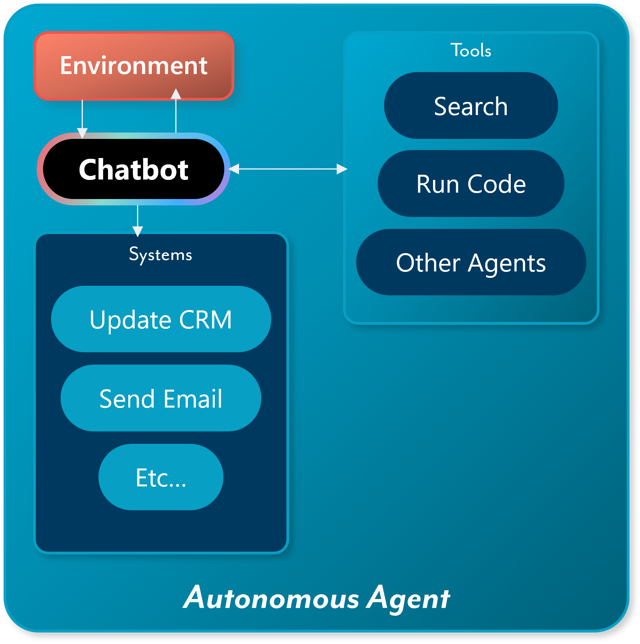
Custom agentic AI development for complex, multi-step workflow orchestration spanning ERP, CRM, and external systems via secure, policy-governed API connectors, enabling agents to execute end-to-end business processes across multiple systems without human intervention at each step
Cross-system integration testing and agent behaviour validation under real-world load conditions, ensuring agents handle edge cases, system failures, and unexpected data states without producing harmful or incorrect actions
Integration of AI agents with legacy environments through middleware abstraction layers, enabling agentic automation within infrastructure that predates modern API standards
Custom AI Model & Azure Integration
Azure AI Foundry deployment and integration for custom generative AI applications embedded directly into your enterprise workflows, including connection to internal knowledge bases, operational data streams, and business process APIs
Hybrid RAG architecture design combining fine-tuned domain models with real-time retrieval pipelines, ensuring AI outputs are both tonally accurate to your organization and factually grounded in live operational data
Adaptive AI integration for environments requiring continuous learning, including feedback loop architecture that allows models to update based on real-time operational data without manual retraining cycles
Model performance monitoring and integration health dashboards using Azure Monitor and Application Insights, providing end-to-end observability across AI pipeline components from data ingestion to output delivery
Integration Security & Governance Architecture
Zero-trust AI integration architecture design: every system connection, data access request, and agent action governed by explicit permission grants, named credentials, and least-privilege principles — with no implicit trust across integration boundaries
Microsoft Purview data classification and sensitivity label enforcement across all AI integration layers, ensuring AI models can only access data they are explicitly authorized to retrieve and that output distribution is governed by the same controls as the underlying data
DLP policy configuration across Power Platform, Copilot Studio, and Azure environments to prevent AI agents and models from exfiltrating data through ungoverned connectors or unapproved integration paths
AI agent governance framework: environment isolation between development and production, connector approval workflows, and full audit logging of all AI-initiated cross-system actions, enabling complete traceability of every decision an AI agent makes on your behalf
Real-time AI runtime inspection and anomaly detection to identify unexpected integration behaviour, data access pattern deviations, and agent action anomalies before they escalate into security or compliance incidents
Why Choose HSO for AI Integration Consulting Services
HSO combines unmatched Microsoft platform depth with a technical-first integration methodology, purpose-built for organizations that need AI connected to real enterprise systems — not demonstrated in a controlled demo.
1
100% Microsoft Focused, With Decades in the Inner Circle
HSO holds all six Microsoft Cloud Solution Partner designations, is an Azure Expert MSP, and is a recognized Microsoft Fabric Featured Partner. HSO has been a member of Microsoft's Inner Circle — a distinction held by less than 1% of global partners, for consecutive years. This depth of platform expertise means your AI integration is designed and implemented by consultants who understand the full Microsoft ecosystem end-to-end: how Dynamics 365 exposes data, how Azure API Management governs connectivity, how Microsoft Fabric unifies disparate data sources, and how Copilot Studio agents interact with live transactional systems. You are not integrating AI onto a platform HSO is learning. You are working with a partner Microsoft trusts most.
2
Integration-First Methodology
HSO's foundational belief is that AI cannot function at enterprise scale without robust integration architecture. Before a single model is deployed, HSO's integration consultants audit your system landscape, map existing APIs and data flows, identify legacy connectivity blockers, and design the middleware and pipeline architecture required for reliable AI operation. This approach directly addresses why isolated AI deployments fail: they are built on integration assumptions that collapse under the weight of real organizational data, real legacy systems, and real security requirements. HSO builds integration from the ground up, not as an afterthought once a model is already in production.
3
Deep AI Engineering Through the Aware Group Acquisition
HSO acquired Aware Group, a premier Data and AI consultancy with a decade of experience taking machine learning and generative AI projects from prototype to production. This acquisition embedded specialist AI engineering capability, RAG pipeline architecture, Azure AI Foundry integration, pro-code model development, directly into HSO's Microsoft integration practice. For organizations integrating custom AI models, adaptive systems, or complex multi-system agentic architectures, this engineering depth is what separates a technically sound production integration from an over-engineered prototype that cannot scale.
4
Industry-Specific Integration Patterns
HSO tailors AI integration architecture to the specific system landscapes of its core sectors using industry IP suites: retail360 for Retail, aec360 for Architecture, Engineering and Construction, legal360 for Professional Service, and gov360 for the Public Sector. Generic integration patterns fail because they are not designed for the specific ERP configurations, data structures, and regulatory constraints that define how each industry operates. HSO's sector-specific integration work means AI is connected to systems the way your industry actually uses them.
Powered by Microsoft's AI Ecosystem
AI Integration Technology Stack
HSO integrates AI using the full depth of the Microsoft platform, ensuring every system connection is secure, governed, and engineered to perform reliably at enterprise scale.
Customers That Rely on Our AI Integration Expertise
See how organizations across industries are moving from disconnected AI tools to production-grade AI that operates natively within their enterprise systems.
Common AI Integration Challenges & How HSO Solves Them
AI integration fails for predictable, structural reasons — and reports state that many organizations see zero measurable P&L return from their generative AI investments as a result. In almost every case, the failure is not the AI model. It is the integration architecture surrounding it.
Legacy Systems with No Modern APIs Block Integration
Challenge: Many enterprise environments are built on decades-old ERP and mainframe infrastructure that lacks the modern REST APIs required to communicate with contemporary AI platforms. When integration architects encounter these systems, the conventional assumption is that a costly rip-and-replace migration must precede any AI deployment. That assumption is commercially prohibitive, operationally dangerous, and wrong, but without a credible alternative, organizations either stall or attempt AI integration that bypasses these systems entirely, creating blind spots in AI-generated outputs.
Solution: HSO architects middleware abstraction layers and AI gateway bridges using Azure API Management that decouple legacy systems from new AI infrastructure. These layers translate modern JSON-RPC requests from AI agents into the authentication protocols and data formats legacy systems understand, enabling intelligent automation within infrastructure built decades before modern AI was commercially viable. Clients retain their existing investments and unlock AI capabilities across their full system landscape without touching core operational infrastructure.
Fragmented Data Estates Corrupt AI Outputs at the Point of Integration
Challenge: AI models are only as reliable as the data pipelines feeding them. In most enterprise environments, data is fragmented across disconnected departmental systems, inconsistently formatted, and governed by conflicting permissions. When AI agents are granted access to this fragmented data estate — even through technically functional API connections, the outputs are unreliable, hallucinated, or contradictory. The integration works; the data it retrieves does not. This is the single most common cause of AI project failure in otherwise well-resourced organizations.
Solution: HSO addresses data integration before any model is connected to live systems. Using Microsoft Fabric, Azure Purview, and HSO's DnA Accelerator, HSO's consultants unify, cleanse, and govern the data estate, integrating structured and unstructured data sources into a single, queryable layer with enforced classification and lineage tracking. Vector embedding and RAG pipeline architecture then connect AI models to this governed data in real-time, ensuring every query returns accurate, contextually grounded outputs rather than fabricated or conflicted responses.
Ungoverned Connectors Create Security and Compliance Exposure
Challenge: Integrating AI natively into business processes introduces severe data security, privacy, and compliance risks that are specific to the integration layer. Autonomous AI agents interacting with sensitive financial, HR, or customer data across multiple system boundaries , without strict connector governance, DLP enforcement, and audit logging, can cause catastrophic data exposure. Gartner's AI TRiSM framework identifies integration-layer governance failure as one of the primary causes of AI security incidents, and one of the hardest to remediate after the fact because exposure has already occurred.
Solution: HSO embeds AI security architecture into every integration engagement from day one. Zero-trust integration design, named credential enforcement, Microsoft Purview sensitivity label propagation across AI pipelines, and DLP policy configuration across Power Platform and Copilot Studio environments ensure that AI can only access, retrieve, and act on data it is explicitly authorized to handle. For agentic AI deployments, HSO implements agent lifecycle management frameworks with environment isolation, connector approval workflows, and full audit logging of every AI-initiated cross-system action.
Shadow AI Creates Ungoverned Integration Debt
Challenge: As AI tools proliferate, individual teams and departments frequently build their own integrations, connecting AI models to internal systems through ad hoc connectors, personal API keys, and unofficial data exports. This shadow AI creates a growing layer of ungoverned integration debt: connections with no security review, no data governance, no audit trail, and no organizational awareness. When these integrations fail, expose data, or produce incorrect outputs that influence business decisions, the organization has no visibility into what connected to what, or when.
Solution: HSO's integration governance engagements begin with an AI integration landscape audit, mapping every existing connection between AI tools and enterprise systems, whether officially sanctioned or not. HSO then consolidates legitimate integrations onto governed, audited infrastructure using Azure API Management and Copilot Studio's centralized connector governance, while decommissioning ungoverned connections that represent active security risk. The result is a single integration layer with full organizational visibility, policy enforcement, and the audit logging required to demonstrate compliance.
Integration Performance and Reliability Fail Under Enterprise Load
Challenge: AI integrations that perform reliably in development environments frequently degrade under real enterprise load conditions. Latency accumulates across multiple API hops, RAG retrieval pipelines slow as data volumes grow, and agent orchestration logic that handles edge cases in testing fails unpredictably when exposed to the full complexity of live operational data. Organizations that discover these performance characteristics after go-live face costly re-architecture work on systems that are already embedded in business-critical processes.
Solution: HSO's integration engineering practice includes performance architecture from the design stage, not as a post-deployment fix. This includes asynchronous integration patterns for non-time-critical workflows, caching and retrieval optimization for RAG pipelines operating at scale, load testing and regression frameworks that validate integration behavior under realistic enterprise data volumes, and Azure Monitor and Application Insights instrumentation providing end-to-end observability across every component of the integration stack. Clients go live on architectures that are engineered for production, not tested into production.
AI That Works Alongside Your Business Is Already Behind. Integration Is What Scales.
IDC projects that global ICT spending will reach $4.0 trillion in 2026, with enterprise AI integration driving some of this growth. The organizations capturing that value are not deploying more AI tools — they are integrating AI more deeply into the systems, data flows, and processes that drive measurable outcomes.
High-performing organizations spend over budgets on AI integration. The gap between those two groups is a technical gap: integration depth, data pipeline maturity, and governance architecture. HSO's AI integration services give your organization the technical foundation to close it — connecting intelligence to the systems where your business actually operates, and building the architecture that scales as your AI ambitions grow.
AI Integration Services FAQs
Frequently Asked Questions
Answers to the most common questions about enterprise AI integration architecture, technical connectivity, and what to expect from an HSO integration engagement.
AI integration services encompass the architecture, engineering, and implementation work required to connect artificial intelligence directly into an organization's existing systems, data pipelines, and workflows.
This includes API and middleware development, data pipeline and RAG architecture, model deployment and connection to live operational data, agent connector engineering, integration security design, and governance framework implementation. The distinction from general AI deployment is technical: integration means AI operates as a native layer within the platforms employees already use, reading live data, executing actions within core systems, and producing outputs grounded in real organizational context — rather than functioning as a separate tool that requires manual data transfer to become useful.
AI implementation typically refers to deploying a specific AI application or tool in a controlled environment. AI integration goes further — it connects that AI directly to your core systems, live data, and business process APIs.
Implementation might mean activating Microsoft 365 Copilot licenses. Integration means configuring Copilot's data permissions, connecting it to your Dynamics 365 operational data via Microsoft Graph, enforcing sensitivity label governance across the retrieval pipeline, and validating that Copilot returns accurate, contextually grounded outputs within your specific organizational environment, not in a generic demo. The technical work that separates a deployed AI from an integrated AI is the entire scope of what HSO's integration services address.
No — and this can be a damaging misconceptions in enterprise AI planning.
HSO architects middleware abstraction layers and AI gateway bridges using Azure API Management that allow modern AI agents to communicate with legacy systems built on decades-old protocols. This decoupling architecture means AI can orchestrate actions within core legacy infrastructure without requiring rip-and-replace migration. Organizations retain their existing infrastructure investment while unlocking intelligent automation across their full system landscape.
Retrieval-Augmented Generation (RAG) is the integration architecture that connects AI language models to your organization's internal data in real-time.
Without RAG integration, AI models can only generate outputs based on their training data, which does not include your operational data, customer records, or proprietary knowledge. A RAG pipeline retrieves relevant documents and data from your governed internal sources at query time and provides them as context to the AI model, enabling it to generate accurate, specific, and organizationally grounded responses.
HSO designs RAG pipelines using Microsoft Fabric, Azure Data Lake, and vector embedding infrastructure that ensure your internal data remains within your security boundary, AI retrieves what it needs without that data ever leaving your environment.
HSO embeds AI security architecture into every integration engagement from the design stage, not as a post-deployment compliance exercise.
This includes zero-trust integration design where every system connection and data access request requires explicit authorization, Microsoft Purview sensitivity label enforcement across all AI retrieval pipelines, DLP policy configuration to prevent ungoverned data flows through AI connectors, and agent governance frameworks with environment isolation, connector approval workflows, and full audit logging. For organizations with existing shadow AI integrations, unofficial connections built by teams without IT oversight, HSO conducts integration landscape audits that map every existing AI-to-system connection and consolidate legitimate integrations onto governed, auditable infrastructure.
Connect With Our AI Integration Experts
Ready to connect AI directly into your systems and turn it into measurable business value? HSO's integration architects are ready to design your integration.
Related Resources
Learn How We're Delivering AI Integration at Scale
This website uses cookies
We, and third parties, use cookies on our website. We use cookies to keep statistics, to save your preferences, but also for marketing purposes (for example, tailoring advertisements). By clicking on 'Settings' you can read more about our cookies and adjust your preferences. By clicking 'Accept all', you agree to the use of all cookies as described in our privacy and cookie policy.
Required
Statistics
Marketing
Required Cookie preferences
Purpose This cookie is used to store your preferences regarding cookies. The history is stored in your local storage.
Cookies
PerplexCookieConsent
Location of Processing European Union
Technologies Used Cookies
Expiration date 1 year
Why required? Required web technologies and cookies make our website technically accessible to and usable for you. This applies to essential base functionalities such as navigation on the website, correct display in your internet browser or requesting your consent. Without these web technologies and cookies our website does not work.
Required Account & login
Purpose These cookies are stored to keep you logged into the website.
Cookies
SessionId
yourAuthCookie
Location of Processing European Union
Technologies Used Cookies
Expiration date 1 year
Why required? Required web technologies and cookies make our website technically accessible to and usable for you. This applies to essential base functionalities such as navigation on the website, correct display in your internet browser or requesting your consent. Without these web technologies and cookies our website does not work.
Required Safe form submissions
Purpose This cookie is used to submit forms to us in a safe way.
Cookies
__RequestVerificationToken
Location of Processing European Union
Technologies Used Cookies
Expiration date 1 year
Why required? Required web technologies and cookies make our website technically accessible to and usable for you. This applies to essential base functionalities such as navigation on the website, correct display in your internet browser or requesting your consent. Without these web technologies and cookies our website does not work.
Required Google Tag Manager
Purpose This service provided by Google is used to load specific tags (or trackers) based on your preferences and location.
Why required? This web technology enables us to insert tags based on your preferences. It is required but adheres to your settings and will not load any tags if you do not consent to them.
Required User Language
Purpose This cookie is used to store your preferences regarding language.
Cookies
perplex-user-language Stores your preferred website language. This cookie expires after 1 year.
Why required? We use your browser language to determine which language to show on our website. When you change the default language, this cookie makes sure your language preference is persistent.
Required Analytics
Purpose This service is used to track anonymized analytics on the HSO.com application. We find it very important that your privacy is protected. Therefore, all data is collected and stored on servers owned by HSO with no third-party dependencies. This cookie helps us collect data from HSO.com so that we can improve the website. Examples of this are: it allows us to track engagement by page, measuring various events like scroll-depth, time on page and clicks.
Cookie
uMarketingSuiteAnalyticsVisitorId This cookie is used to uniquely identify users. The cookie expires after 1 year.
Required A/B Testing
Purpose This cookie enables HSO to run A/B tests across the HSO.com application. A/B testing (also called split testing) is comparing two versions of a web page to learn how we can improve your experience. All data is collected and stored on servers owned by HSO with no third-party dependencies.
Statistics Google Analytics
Purpose With your consent, this website will load Google Analytics to track behavior across the site.
Cookies
_ga Used to uniquely identify users. The cookie expires after 2 years.
_ga_1D4MT58NBE Used to persist session state. The cookie expires after 2 years.
_gid Registers a unique ID that is used to generate statistical data on how the visitor uses the website. This cookie expires after 1 day.
Statistics Microsoft Clarity
Purpose With your consent, this website will load the Microsoft Clarity script, which helps us understand how people use the site. The cookies set by Clarity collect session-level data like how the visitor landed on the site, which pages they viewed, their language preference, and even their general location. This data powers Clarity’s features like heatmaps and session recordings, helping us see which parts of a page get attention and where users drop off. The goal isn’t to track individuals, but to understand patterns that can improve the user experience. Learn more about Microsoft Clarity cookies here.
Cookies
_clck Domain: hso.com Persists the Clarity User ID and preferences, which are unique to this website, and attributes them to the same user ID.
_clsk Domain: hso.com Connects multiple page views by a user into a single Clarity session recording.
clid Domain: clarity.ms Identifies the first-time Clarity saw this user on any site using Clarity.
ANONCHK Domain: clarity.ms This checks if a browser ID (MUID) is passed to another Microsoft cookie used for ads. For Clarity, this always returns a “no.”
MR Domain: clarity.ms Indicates whether to refresh the MUID cookie, which is used for analytics and advertising.
MUID Domain: clarity.ms Identifies unique web browsers visiting Microsoft sites. These cookies are used for advertising, site analytics, and other operational purposes.
SM Domain: c.clarity.ms Used in synchronizing the MUID across Microsoft domains.
Technologies Used Cookies
Marketing Google Advertising
Purpose With your consent, this website will load the Google Advertising tag which enables HSO to report user activity from HSO.com to Google. This enables HSO to track conversions and create remarketing lists based on user activity on HSO.com.
Possible cookies Please refer to the below page for an updated view of all possible cookies that the Google Ads tag may set.
Purpose With your consent, we use IPGeoLocation to retrieve a country code based on your IP address. We use this service to be able to trigger the right web technologies for the right people.
Marketing LeadFeeder
Purpose With your consent, we use Leadfeeder to identify companies by their IP-addresses. Leadfeeder automatically filters out all users visiting from residential IP addresses and ISPs. All visit data is aggregated on the company level.
Cookies
_lfa Used to set a unique identifier to separate different visitors. The cookie expires after 2 years.
Marketing LinkedIn
Purpose With your consent, this website will load the LinkedIn Insights tag which enables us to see analytical data on website performance, allows us to build audiences, and use retargeting as an advertising technique. Learn more about LinkedIn cookies here.
Cookies
li_mc Used as a temporary cache to avoid database lookups for a member's consent for use of non-essential cookies and used for having consent information on the client side to enforce consent on the client side. The cookie expires after 6 months.
lang Used to remember a user's language setting to ensure LinkedIn.com displays in the language selected by the user in their settings. The cookie expires after the session.
li_gc Used to store consent of guests regarding the use of cookies for non-essential purposes. This cookie expires after 6 months.
lidc To facilitate data center selection. This cookie expires after 24 hours.
bcookie Browser Identifier cookie to uniquely identify devices accessing LinkedIn to detect abuse on the platform. This cookie expires after 1 year.
liap Used to denote the logged-in status of a member. This cookie expires after 1 year.
Marketing Microsoft Advertising
Purpose With your consent, this website will load the Microsoft Advertising Universal Event Tracking tag which enables HSO to report user activity from HSO.com to Microsoft Advertising. HSO can then create conversion goals to specify which subset of user actions on the website qualify to be counted as conversions. Similarly, HSO can create remarketing lists based on user activity on HSO.com and Microsoft Advertising matches the list definitions with UET logged user activity to put users into those lists.
Cookies
MUID This is a Microsoft cookie that contains a GUID assigned to your browser. It gets set when you interact with a Microsoft property, including a UET beacon call or a visit to a Microsoft property through the browser.
_uetmsclkid This is the Microsoft Click ID, which is used to improve the accuracy of conversion tracking.
_uetsid This contains the session ID for a unique session on the site. It also contains some additional parameters like: insights_sessionId, timestamp, pagenumber, upgrade, upload.
_uetvid UET assigns this unique, anonymized visitor ID, representing a unique visitor. UET stores this data in a first-party cookie. It also contains some additional parameters like: insights_userId, cookieVersion, expiryTime, consent, cookie_creation_time.
Technologies Used Cookies
Marketing Microsoft Dynamics 365 Marketing
Purpose With your consent, this website will load the Microsoft Dynamics 365 Marketing tag which enables HSO to score leads based on your level of interaction with the website. The cookie contains no personal information, but does uniquely identify a specific browser on a specific machine. Learn more about Microsoft Dynamics 365 Marketing cookies here.
Cookies
msd365mkttr Identifies a website visitor/ end user (by browser). When a Microsoft Dynamics 365 form is submitted by a web visitor, a new contact/lead is created and we leverage the cookie available in the browser to associate previous visits with the newly generated contact/lead. This cookie expires after 2 years.
msd365mkttrs To find out how much time a website visitor spent on a certain page. The cookie is deleted when your session ends.
Technologies Used Cookies
Marketing Salesfeed
Marketing Spotler
Purpose With your consent, we use Spotler to measures more extensive recurring website visits based on IP address and draw up a profile of a visitor.
Cookies
wow.anonymousId Registers statistical data on users' behavior on the website. The cookie expires after 399 days.
Marketing Vimeo
Purpose With your consent, this website will show videos embedded from Vimeo.
Technologies Used Cookies
Marketing YouTube
Purpose With your consent, this website will show videos embedded from Youtube.
Cookies
VISITOR_INFO1_LIVE To provide bandwidth estimations. The cookie expires after 6 months.
YSC To ensure that requests within a browsing session are made by a real user, and not by other sites. This cookie prevents malicious sites from acting on behalf of a user without that user’s knowledge. The cookie is deleted when your session ends.
Technologies Used Cookies
Marketing Meta / Facebook
Purpose With your consent, this website will load the Meta-pixel tag which enables us to see analytical data on website performance, allows us to build audiences, and use retargeting as an advertising technique through platforms owned by Meta, like Facebook and Instagram. Learn more about Facebook cookies here. You can adjust how ads work for you on Facebook here.
Cookies
act This cookie helps to distinguish between two sessions for the same user, created at different times. This cookie expires at the end of the session.
c_user Contains the user ID of the currently logged-in user. This cookie expires after 3 months.
datr To identify the web browser being used to connect to Facebook independent of the logged-in user. This cookie expires after 2 years.
fr Contains an encrypted Facebook ID and Browser ID. This cookie expires after 1 month.
presence Used to contain the user’s chat state. This cookie expires at the end of the session.
sb This cookie is used by Meta/Facebook to improve friend suggestions. This cookie expires after 18 months.
wd Used to optimize the rendering of the page. This cookie expires after 1 week.
xs This cookie contains multiple pieces of information:
The first part of the value is an up to two-digit number representing the session number.
The second portion of the value is a session secret.
The third, optional component is a ‘secure’ flag if the user has enabled the secure browsing feature.
Marketing LeadInfo
Purpose With your consent, we use LeadInfo to identify companies by their IP-addresses. LeadInfo automatically filters out all users visiting from residential IP addresses and ISPs. These cookies are not shared with third parties under any circumstances.
Cookies
_li_id.xxxx A first-party cookie to determine if the visitor is a new visitor or a returning visitor. This cookie is only used in the current session.
_li_ses.xxxx A first-party cookie to determine which pages have been visited during their session. This cookie will be saved for two years.
Marketing TechTarget
Purpose With your consent, we use TechTarget to identify companies by their IP address(es).
Cookies
__cf_bm This cookie is used to distinguish between humans and bots. This is beneficial for the website, to make valid reports on the use of the website.
Marketing Personalization
Purpose This enables HSO to personalize pages across the HSO.com application. Personalization helps us to tailor the website to your specific needs, aiming to improve your experience on HSO.com. All data is collected and stored on servers owned by HSO with no third-party dependencies.
Marketing ZoomInfo
Purpose With your consent, we use ZoomInfo to identify companies by their IP addresses. The data collected helps us understand which companies are visiting our website, enabling us to target sales and marketing efforts more effectively.
Cookies
_wsLiteTok ZoomInfo Websights cookie for tracking domain information in form fills and matching against ZoomInfo database. This does not store personally identifiable information.
_zitok First-party cookie for maintaining a unique visitor identifier. It contains an opaque GUID to represent the current visitor.